RIRS Surgery in Chembur, Mumbai
Kidney stones that do not pass naturally or cause repeated pain, urinary obstruction or other complications may require active treatment. Retrograde Intrarenal Surgery (RIRS) is an endoscopic procedure used to treat selected stones located inside the kidney without making an external surgical incision.
Dr. Shyam Mohan, Consultant Urologist, Uro-Oncologist and Robotic Surgeon in Chembur, Mumbai, provides evaluation and management of urinary stones, including RIRS and other endourological procedures.
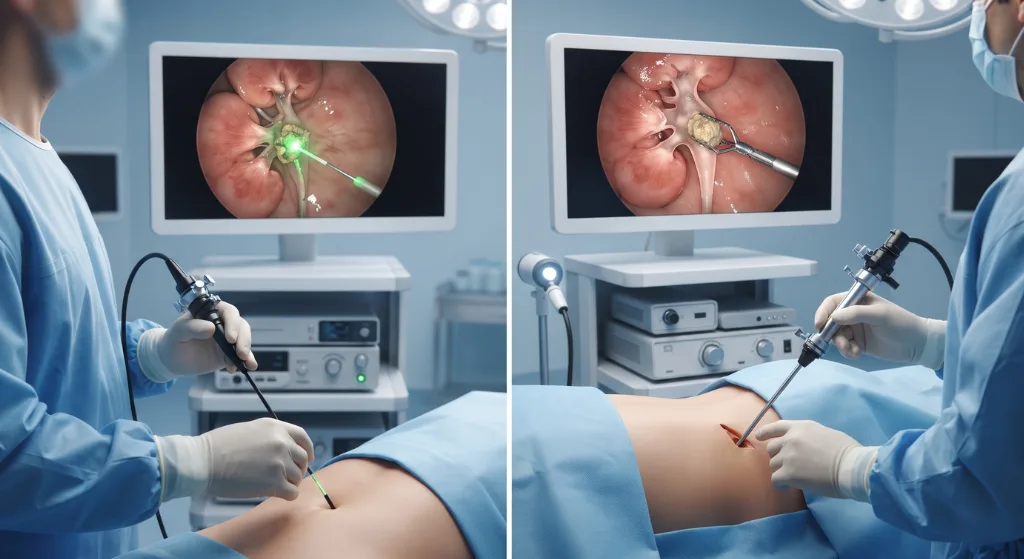
During RIRS surgery, a flexible ureteroscope is passed through the urinary passage into the kidney. Laser energy may be used to break the stone into smaller fragments, which can be removed or allowed to pass through urine.
RIRS may be suitable for certain kidney stones, depending on their size, location, composition, associated symptoms and the patient's overall health.

Important:
Fever with a suspected obstructing kidney stone, inability to pass urine or severe uncontrolled pain requires urgent medical attention.
What Is RIRS Surgery?
RIRS stands for Retrograde Intrarenal Surgery.
It is a minimally invasive endoscopic procedure used to access and treat stones within the kidney through the natural urinary passage.
During RIRS, the urologist inserts a thin, flexible instrument called a ureteroscope through the urethra, bladder and ureter into the kidney.
The instrument contains a camera that helps the surgeon visualise the stone.
A laser fibre can then be used to fragment the stone into smaller pieces. Depending on the technique, fragments may be retrieved using a specialised basket or left to pass through urine.
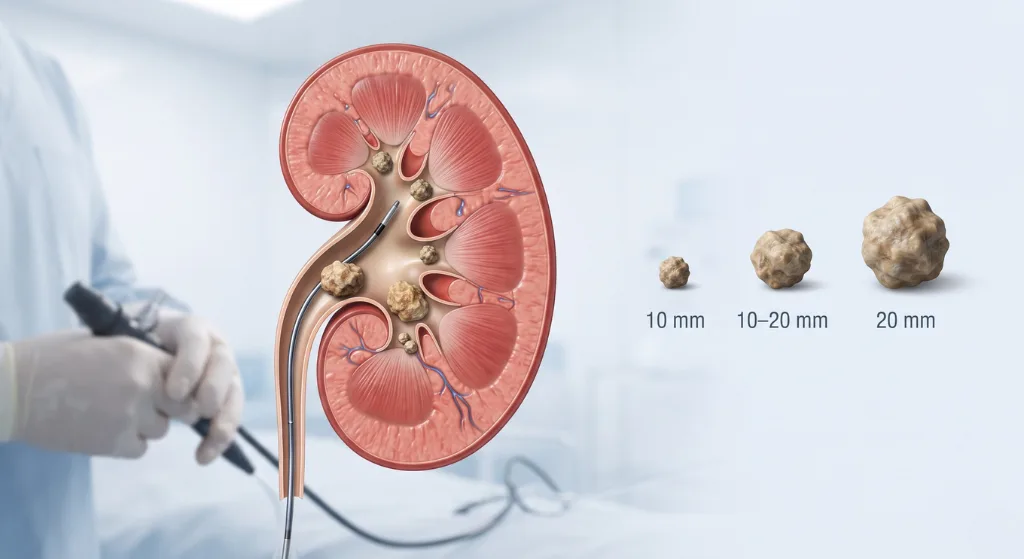
Does RIRS Surgery Require an Incision?
RIRS generally does not require an external skin incision.
The procedure is performed through the urinary tract, unlike Percutaneous Nephrolithotomy (PCNL), which involves creating an access tract through the back.
However, RIRS still requires anaesthesia and carries potential surgical risks.
It is not appropriate for every kidney stone.
When Is RIRS Surgery Recommended?
RIRS may be considered when a kidney stone requires active treatment and can be accessed safely with a flexible ureteroscope.
Situations in which RIRS may be considered include:
- Kidney stones causing persistent or recurrent pain
- Selected kidney stones unlikely to clear without intervention
- Stones associated with urinary obstruction
- Selected stones that have not responded to shock wave lithotripsy
- Stones in certain locations within the kidney
- Patients for whom an endoscopic approach is clinically appropriate
- Selected patients who may not be suitable for PCNL
The decision depends on imaging findings, kidney anatomy, infection risk, stone burden and general health.
What Size Kidney Stone Can Be Treated With RIRS?
RIRS can be considered for selected small and medium-sized kidney stones.
Stones smaller than 10mm
Some stones may be monitored or treated with shock wave lithotripsy. RIRS may be considered when active removal is appropriate.
Stones measuring 10–20mm
RIRS is a commonly considered treatment option for selected stones in this range. PCNL or shock wave lithotripsy may also be appropriate depending on stone characteristics.
Stones larger than 20mm
PCNL is generally recommended as the first-line procedure for kidney stones larger than 2cm.
RIRS may be considered in selected circumstances, such as when PCNL is unsuitable or contraindicated, but more than one RIRS session may be required.
Stone size alone does not determine the appropriate treatment.
What Symptoms May Indicate a Kidney Stone?
Kidney stones may cause symptoms when they move, obstruct urine flow or irritate the urinary tract.
Common symptoms include:
- Sharp pain in the side or back
- Pain spreading to the lower abdomen or groin
- Blood in the urine
- Burning or discomfort during urination
- Increased urinary frequency
- Nausea or vomiting
- Difficulty passing urine
Some kidney stones remain asymptomatic and are discovered during imaging for another condition.
When Should You Seek Emergency Care?
Seek urgent medical attention if you develop:
- Fever or chills with suspected kidney stone pain
- Severe pain that cannot be controlled
- Persistent vomiting or dehydration
- Inability to pass urine
- Symptoms of infection with an obstructed urinary system
An infected, obstructed kidney may require urgent drainage using a ureteric stent or nephrostomy tube. Definitive RIRS stone treatment is generally postponed until the infection has been appropriately managed.
How Is RIRS Surgery Performed?
RIRS involves several stages, beginning with the assessment of the kidney stone and the patient's medical condition.
Step 1: Preoperative Evaluation
The urologist reviews imaging investigations to understand the stone's size, location, density and accessibility.
Investigations may include:
- Ultrasound KUB
- Non-contrast CT KUB
- Urine examination and culture
- Kidney function tests
- Blood investigations
- Anaesthesia assessment
A urine infection, if present, may require treatment before planned surgery.
Step 2: Anaesthesia
RIRS is commonly performed under general anaesthesia.
The anaesthesia team evaluates the patient's medical history and determines the appropriate anaesthetic plan.
Step 3: Flexible Ureteroscope Insertion
A flexible ureteroscope is passed through the urethra into the urinary bladder.
The instrument is then guided through the ureter and into the kidney.
The surgeon uses the camera to examine the kidney's collecting system and locate the stone.
In selected cases, a ureteral access sheath may be used to facilitate repeated instrument access.
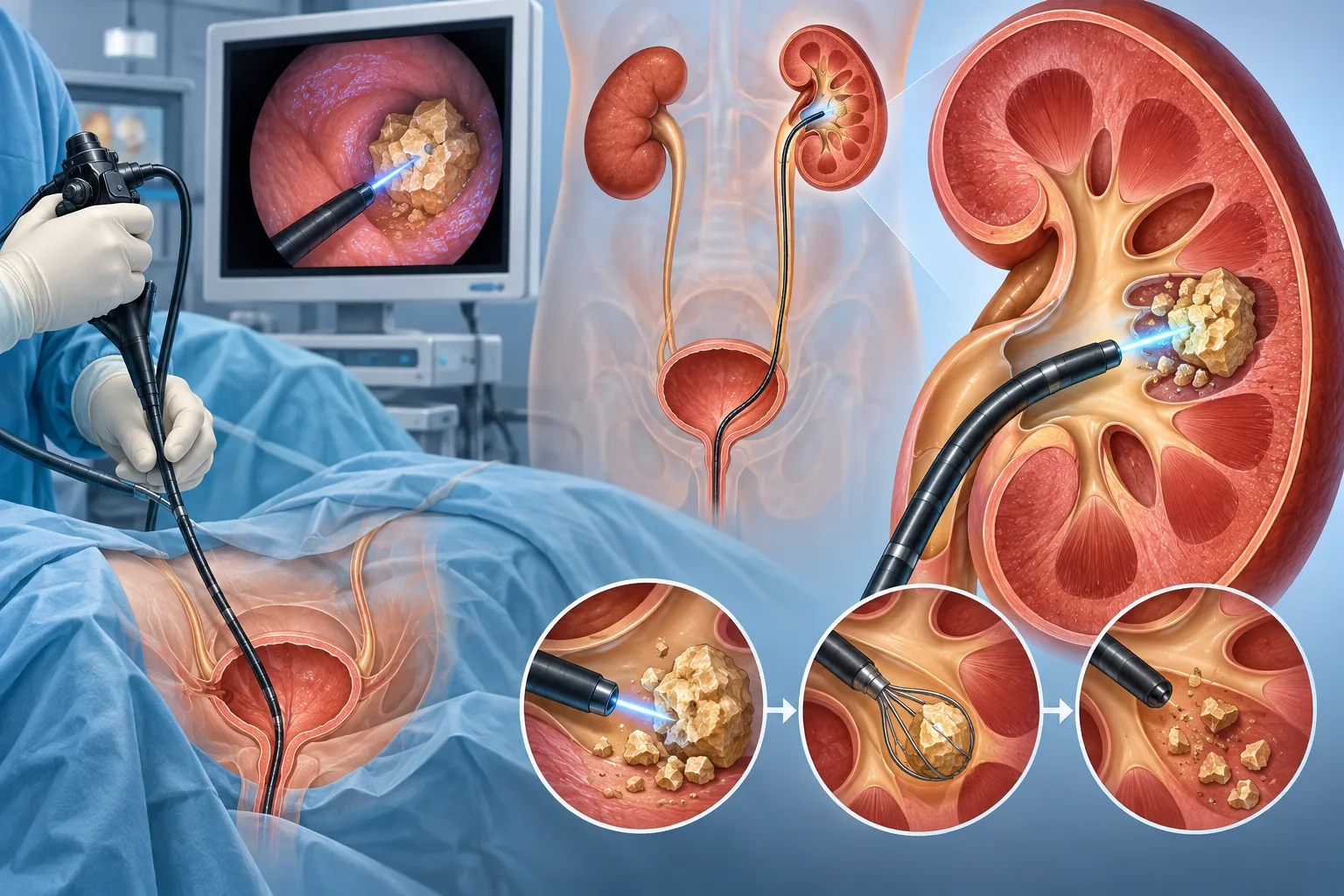
Step 4: Laser Stone Fragmentation
Once the stone is visualised, a laser fibre may be used to break it into smaller fragments.
Holmium and thulium fibre lasers are recognised technologies for laser lithotripsy during flexible ureteroscopy.
The surgeon may use different fragmentation techniques depending on the stone's characteristics.
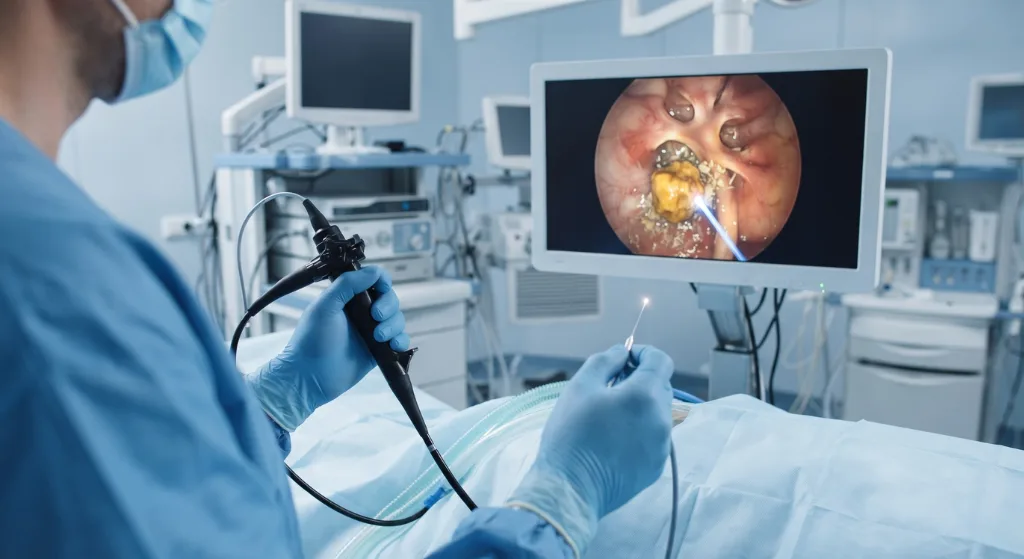
Step 5: Stone Fragment Removal
Some fragments may be removed using a specialised retrieval basket.
Very small fragments may be left to pass naturally, according to the procedure and operative findings.
Stone samples may be sent for laboratory analysis to help determine their composition.
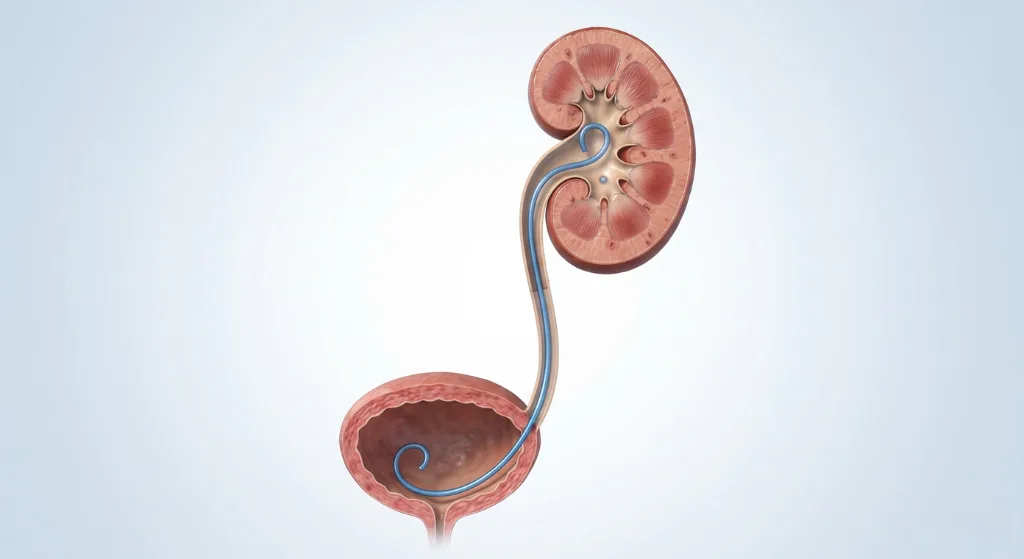
Step 6: DJ Stent Placement, If Required
A temporary Double-J (DJ) ureteric stent may be inserted to support urine drainage after the procedure.
A DJ stent is not mandatory after every uncomplicated RIRS or ureteroscopic procedure.
Stenting depends on factors such as ureteric swelling, trauma, infection risk, residual fragments and other clinical findings.
Step 7: Postoperative Monitoring
After RIRS, the patient is monitored for recovery from anaesthesia, pain, urine output and possible complications.
Discharge timing depends on the procedure's complexity, medical condition and postoperative recovery.
What Are the Potential Benefits of RIRS Surgery?
RIRS offers several possible advantages in appropriately selected patients.
No External Surgical Incision
RIRS reaches the kidney through the natural urinary passage, avoiding a skin incision.
Direct Visualisation of Kidney Stones
A flexible endoscope allows the urologist to visualise the stone and surrounding collecting system during treatment.
Laser Fragmentation
Laser energy can be used to break suitable stones into smaller pieces.
Kidney-Preserving Approach
RIRS treats stones within the urinary collecting system without requiring removal of healthy kidney tissue as part of the intended procedure.
Recovery After Endoscopic Treatment
Some patients undergoing uncomplicated RIRS can return to light routine activities relatively soon.
However, these advantages do not mean that RIRS is suitable for every patient or that it is free from complications.
Stone clearance may require more than one procedure.
RIRS vs PCNL – Which Is Better for Kidney Stones?
RIRS and PCNL are recognised surgical treatments for kidney stones, but they use different approaches.
| Factor | RIRS | PCNL |
|---|---|---|
| Full form | Retrograde Intrarenal Surgery | Percutaneous Nephrolithotomy |
| Main approach | Through the urinary passage | Through an access tract in the back |
| External incision | Generally none | Small skin incision |
| Common use | Selected kidney stones, often under 2cm | Larger or complex kidney stones |
| Stone fragmentation | Usually laser-based | Laser, ultrasonic or other lithotripsy methods |
| Recovery | Often relatively short in uncomplicated cases | May require longer recovery |
| Major considerations | Residual fragments, infection, ureteric injury | Bleeding, infection, injury to surrounding structures |
| Additional procedures | May be required, especially for larger stones | May also be required for complex stone burdens |
Is RIRS Better Than PCNL for a 15mm Kidney Stone?
For a 15mm kidney stone, RIRS may be a suitable option, but PCNL, mini-PCNL or shock wave lithotripsy may be considered depending on the stone's density, location, anatomy and other factors.
For larger kidney stones exceeding 2cm, PCNL is generally the preferred first-line procedure when feasible.
The most suitable choice should be determined following clinical evaluation.
RIRS vs URSL – What Is the Difference?
RIRS and URSL both involve endoscopic access through the urinary tract.
The main difference is the location of the stone and the instruments typically used.
RIRS Surgery
RIRS uses flexible ureteroscopy to reach stones within the kidney.
URSL Surgery
Ureteroscopic Laser Lithotripsy (URSL) is commonly performed for stones within the ureter, the tube connecting the kidney and urinary bladder.
Both techniques may use laser energy for stone fragmentation.
The treatment decision depends on stone location, accessibility and clinical findings.
Is RIRS Surgery Painful?
RIRS is usually performed under anaesthesia, so patients generally do not experience pain during the operation.
However, temporary discomfort may occur after surgery.
Common postoperative symptoms can include:
- Mild burning during urination
- Blood-tinged urine
- Urinary urgency or frequency
- Flank discomfort
- Lower abdominal discomfort
- DJ stent-related irritation
Symptoms vary between patients.
Severe or worsening pain, fever, inability to urinate or persistent heavy bleeding should be assessed promptly.
What Are the Risks and Complications of RIRS?
Although RIRS is minimally invasive, it remains a surgical procedure.
Possible complications include:
- Urinary tract infection
- Fever or sepsis
- Bleeding
- Ureteric injury or perforation
- Residual stone fragments
- Temporary urinary discomfort
- DJ stent-related symptoms
- Ureteric narrowing or stricture
- Rare injury to the kidney's collecting system
- Anaesthesia-related complications
- Need for an additional procedure
The risk of complications depends on infection status, stone characteristics, anatomy, medical conditions and procedure complexity.
The treating urologist should discuss relevant risks and alternatives before surgery.
Recovery After RIRS Surgery
Recovery following RIRS varies according to the stone, procedure complexity and patient's medical condition.
First 24–48 Hours
Some patients experience mild urinary burning, blood-tinged urine or discomfort.
Patients should follow prescribed medicine, hydration and activity instructions.
First Few Days
Light activities may be resumed gradually after uncomplicated surgery if the treating team permits.
A DJ stent, if present, may cause urinary urgency, flank discomfort or increased frequency.
Return to Work
The timing depends on job requirements, anaesthesia recovery and postoperative symptoms.
Patients doing physically demanding work may require additional recovery time.
DJ Stent Removal
If a DJ stent is placed, the doctor will explain when it should be removed.
Stent removal timing varies according to the clinical situation.
Patients should attend the scheduled removal appointment because prolonged stent retention can lead to complications.
Follow-Up After RIRS
Follow-up may include imaging to assess stone clearance, evaluate the urinary tract and identify any remaining fragments.
Some patients may require additional treatment if clinically significant residual stones remain.
Can Kidney Stones Return After RIRS?
Yes. RIRS treats existing kidney stones but does not eliminate the possibility of new stones forming.
Kidney stone recurrence depends on several factors, including stone composition, fluid intake, diet, metabolic conditions and personal history.
Patients with recurrent kidney stones may benefit from metabolic evaluation and preventive advice.
How Can You Prevent Kidney Stones After RIRS?
Measures that may help reduce future stone formation include:
- Drinking sufficient fluids to maintain adequate urine output, unless fluid restriction is medically advised
- Reducing excessive salt intake
- Maintaining normal dietary calcium intake
- Avoiding excessive animal protein intake where relevant
- Following stone-specific dietary recommendations
- Maintaining appropriate physical activity and body weight
- Taking preventive medicines when prescribed
- Attending recommended follow-up appointments
Stone analysis and selected blood or urine investigations can help guide individual prevention.
About Dr. Shyam Mohan – Urologist in Chembur, Mumbai
Dr. Shyam Mohan is a Consultant Urologist, Uro-Oncologist and Robotic Surgeon.
Qualifications:
- MBBS
- MS (General Surgery)
- MCh (Urology)
- Fellowship in Advanced Robotic Uro-Oncology
His clinical practice includes general urology, endourology, uro-oncology, laparoscopic urological procedures and robotic surgery.
RIRS is included among the endourological procedures described on his website.
For patients diagnosed with kidney stones, consultation involves reviewing imaging findings, symptoms, kidney function and treatment suitability before discussing appropriate options.

Dr. Shyam Mohan
RIRS Surgery Consultation in Chembur, Mumbai
Patients with kidney stones causing persistent symptoms, urinary obstruction or repeated episodes of pain may require urological evaluation.
Dr. Shyam Mohan provides consultations at Synergy Health Clinic, Chembur, Mumbai.
During the consultation, patients can discuss:
- Whether their kidney stone requires surgery
- Whether RIRS is suitable for the size and location of the stone
- Whether PCNL or another treatment may be more appropriate
- Possible risks and complications
- Recovery and follow-up requirements
- Prevention of future kidney stones
Bring the following reports, if available:
- Ultrasound KUB reports
- CT KUB reports and images
- Blood and urine test reports
- Previous kidney stone treatment records
- List of current medicines
- Information about previous urinary infections
Following assessment, the urologist can explain whether observation, RIRS, PCNL or another treatment approach is appropriate.
Frequently Asked Questions About RIRS Surgery
The procedure recommendations, particularly regarding stone size, PCNL selection, laser options and selective stenting, are based on the EAU 2026 Urolithiasis Guidelines.
Clinic Location
Synergy Health Clinic
501, 5th Floor, Building 2, Business Point, Opposite Saibaba Mandir, Chembur, Mumbai, Maharashtra – 400077
Call Clinic