Prostate Cancer Treatment in Chembur, Mumbai
Prostate cancer is a condition in which abnormal cells develop in the prostate gland. It is one of the cancers affecting men, particularly with increasing age. Many cases develop slowly, while others may grow more rapidly and require timely treatment.
Dr. Shyam Mohan, Consultant Urologist, Uro-Oncologist and Robotic Surgeon in Chembur, Mumbai, provides evaluation and management of prostate-related conditions, including suspected and diagnosed prostate cancer.
Prostate cancer treatment depends on the stage and grade of the disease, PSA level, imaging findings, general health and individual patient preferences. Options may include active surveillance, surgery, radiation therapy, hormone therapy and systemic treatments.
A prostate cancer consultation helps patients understand their diagnosis, available treatment approaches and appropriate next steps.
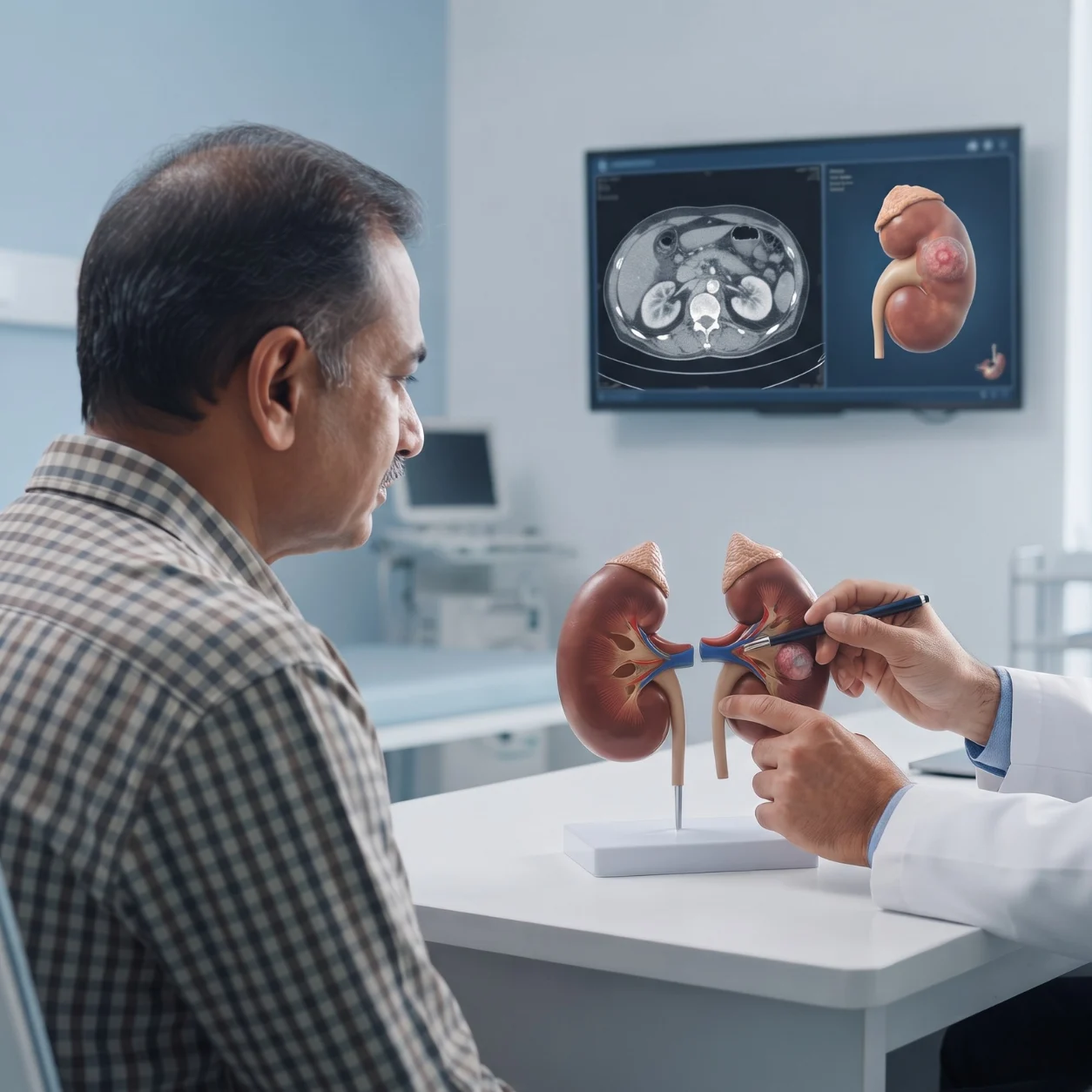
What Is Prostate Cancer?
The prostate is a small gland located below the urinary bladder. It surrounds part of the urethra, the tube that carries urine out of the body.
Prostate cancer develops when cells within the prostate begin to grow abnormally.
Some prostate cancers remain confined to the gland and grow slowly. Others may extend beyond the prostate or spread to nearby lymph nodes, bones or other organs.
The behaviour of prostate cancer varies between individuals. Treatment decisions depend on whether the cancer is localised, locally advanced or metastatic, and on its risk characteristics.
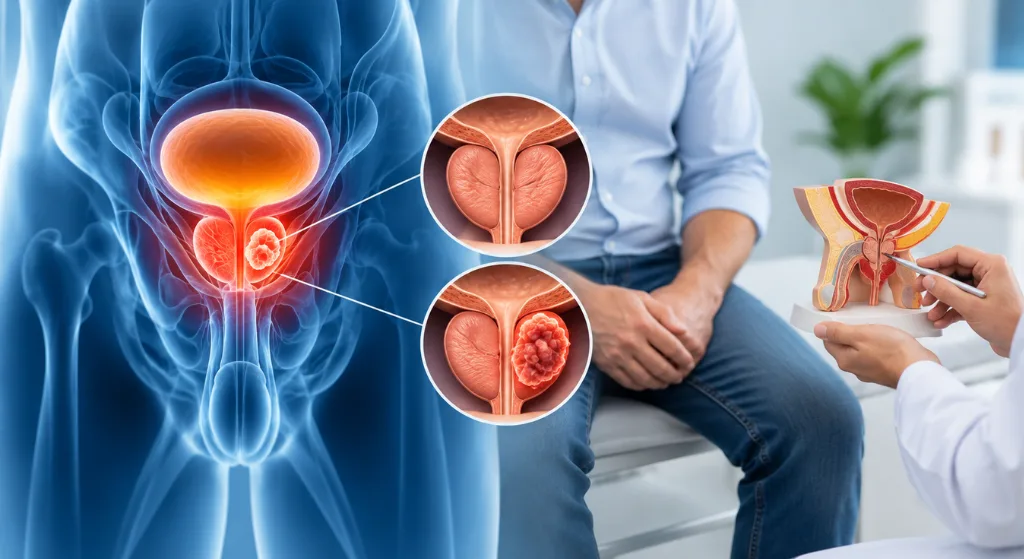
Is Prostate Cancer the Same as Prostate Enlargement?
No. Prostate cancer and benign prostatic hyperplasia (BPH) are different conditions.
BPH is a non-cancerous enlargement of the prostate that commonly causes urinary problems as men age. Prostate cancer involves malignant cells and may not cause symptoms in its early stages.
Having an enlarged prostate does not automatically mean that a person has prostate cancer. However, both conditions can occur in the same individual.
Related Service: Prostate Enlargement Treatment in Chembur →
What Are the Early Signs and Symptoms of Prostate Cancer?
Early-stage prostate cancer frequently causes no noticeable symptoms. Some patients are identified following PSA testing or investigations for other prostate concerns.
When symptoms occur, they may include:
- Difficulty starting urination
- Weak or interrupted urine stream
- Frequent urination, particularly at night
- Blood in urine or semen
- Difficulty emptying the bladder
- Persistent urinary discomfort
These symptoms are not specific to prostate cancer and may also result from BPH, infections or other urinary conditions.
Symptoms of Advanced Prostate Cancer
When prostate cancer spreads beyond the prostate, symptoms may include:
- Persistent back, hip or bone pain
- Unexplained weight loss
- Increasing fatigue
- Reduced appetite
- Difficulty passing urine
- Leg weakness or numbness in certain advanced cases
Men experiencing persistent urinary symptoms or an abnormal PSA result should seek appropriate medical evaluation rather than assuming they have prostate cancer.
What Causes Prostate Cancer?
The exact cause of prostate cancer is not fully understood. It develops through genetic changes that affect how prostate cells grow and divide. Certain factors are associated with increased risk:
- Increasing Age: Prostate cancer becomes more common as men grow older, particularly after the age of 50.
- Family History: Men with a father or brother diagnosed with prostate cancer may have an increased risk.
- Inherited Genetic Variants: Some inherited genetic variants, including certain BRCA1 and BRCA2 mutations, are associated with increased prostate cancer risk.
- Other Factors: Ancestry, genetics and certain environmental or lifestyle factors may influence risk. However, having one or more risk factors does not mean that prostate cancer will necessarily develop.
Patients with a significant family history may benefit from an individualised discussion about risk assessment and PSA testing.
How Is Prostate Cancer Diagnosed?
Prostate cancer diagnosis involves a combination of clinical assessment, laboratory tests, imaging and, when indicated, prostate biopsy. Dr. Shyam Mohan may recommend relevant investigations based on a patient's clinical history and risk profile:
1. PSA Blood Test
The Prostate-Specific Antigen (PSA) blood test measures the amount of PSA in the blood. An elevated PSA may be associated with prostate cancer, but can also occur due to benign prostate enlargement, inflammation or other factors. A high PSA does not automatically mean prostate cancer, and a normal PSA does not exclude every prostate cancer.
2. Digital Rectal Examination (DRE)
A Digital Rectal Examination allows the doctor to assess the prostate for changes in size, shape or consistency. An abnormal examination may lead to further evaluation, but it does not confirm cancer.
3. Multiparametric MRI of the Prostate
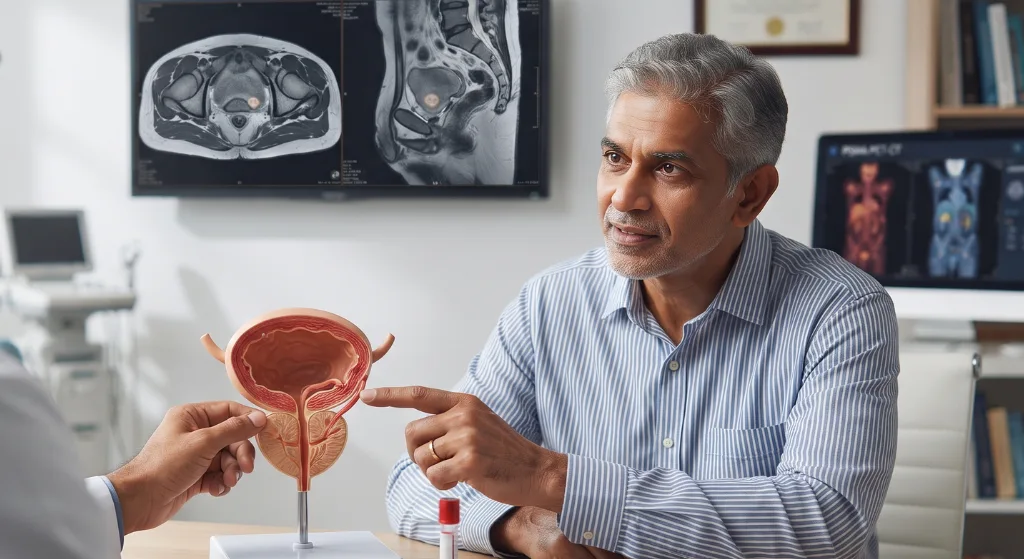
Multiparametric Magnetic Resonance Imaging (mpMRI) helps identify suspicious areas within the prostate. It may be recommended before biopsy to support risk assessment and guide tissue sampling. MRI findings are often described using the PI-RADS classification system.
4. Prostate Biopsy
A prostate biopsy involves collecting small tissue samples from the prostate for laboratory examination. The biopsy helps determine whether cancer is present and provides information about its grade. Depending on findings, targeted and systematic sampling may be appropriate.
5. Gleason Score & ISUP Grade Group
If prostate cancer is diagnosed, the pathology report describes the cancer's microscopic appearance. The Gleason score and ISUP Grade Group help estimate how aggressively the cancer may behave alongside PSA levels, imaging and clinical stage.
6. PSMA PET-CT & Staging Scans
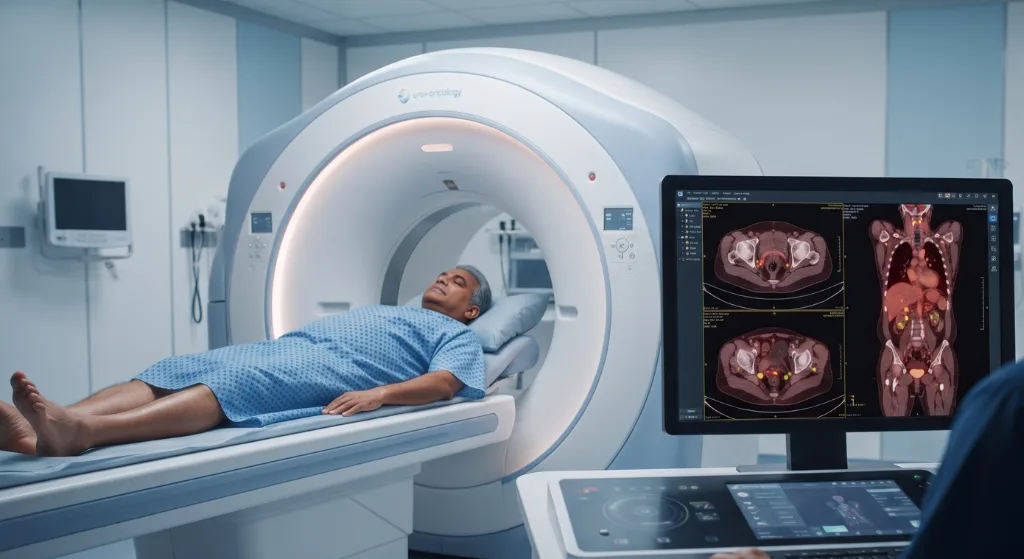
Selected patients may require additional scans to determine whether prostate cancer has spread beyond the prostate. PSMA PET-CT can help identify prostate cancer deposits in lymph nodes, bones and other tissues based on disease stage.
Understanding the Stages of Prostate Cancer
Prostate cancer staging helps determine the extent of the disease and guides treatment planning:
| Stage | General description |
|---|---|
| Stage I | Cancer is generally confined to the prostate with favourable risk features |
| Stage II | Cancer remains localised but may have less favourable features |
| Stage III | Cancer may have higher-risk characteristics or extend beyond the prostate |
| Stage IV | Cancer has spread to certain lymph nodes or distant parts of the body |
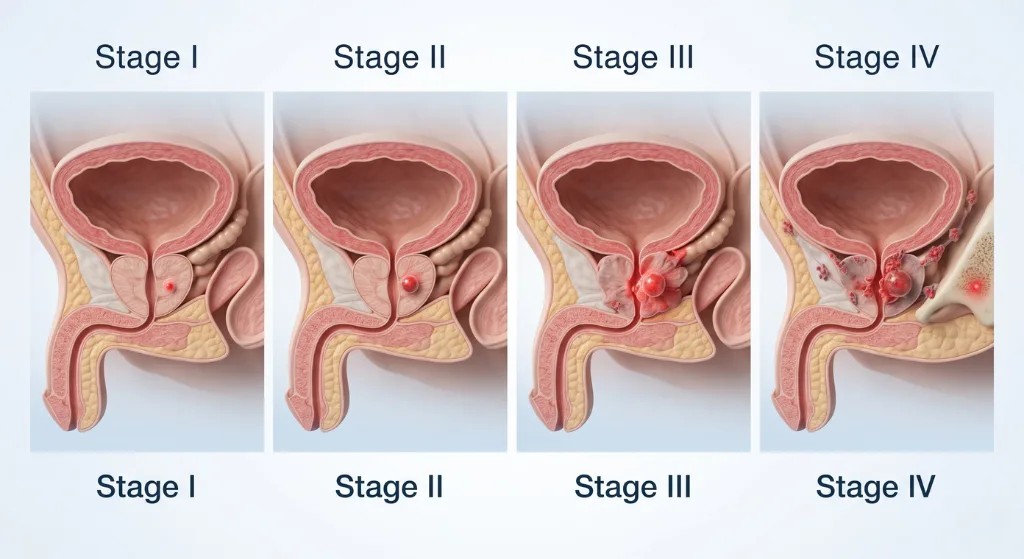
This is a simplified overview. Actual staging uses the TNM classification along with PSA and tumour grade. Treatment is determined by both disease stage and risk classification rather than stage alone.
Prostate Cancer Treatment Options in Chembur, Mumbai
There are several recognised approaches to prostate cancer management. Not every patient requires immediate surgery. The recommended treatment depends on cancer grade, stage, risk category, general health, life expectancy and personal preferences.
1. Active Surveillance for Selected Early-Stage Prostate Cancer
Active surveillance may be appropriate for men with low-risk localised prostate cancer and certain carefully selected favourable intermediate-risk cancers. Instead of beginning immediate surgery or radiation therapy, the healthcare team monitors the condition through scheduled PSA testing, clinical assessment, imaging and repeat biopsy when indicated. The aim is to avoid unnecessary treatment-related side effects while identifying clinically meaningful progression.
2. Radical Prostatectomy Surgery
Radical prostatectomy is an operation in which the prostate gland and seminal vesicles are removed to treat prostate cancer. In selected patients, nearby lymph nodes may also be removed for assessment or treatment. Radical prostatectomy may be considered for patients with localised prostate cancer and selected cases of locally advanced disease. The procedure may be performed using open, laparoscopic or robotic-assisted techniques.
3. Robotic Prostate Cancer Surgery
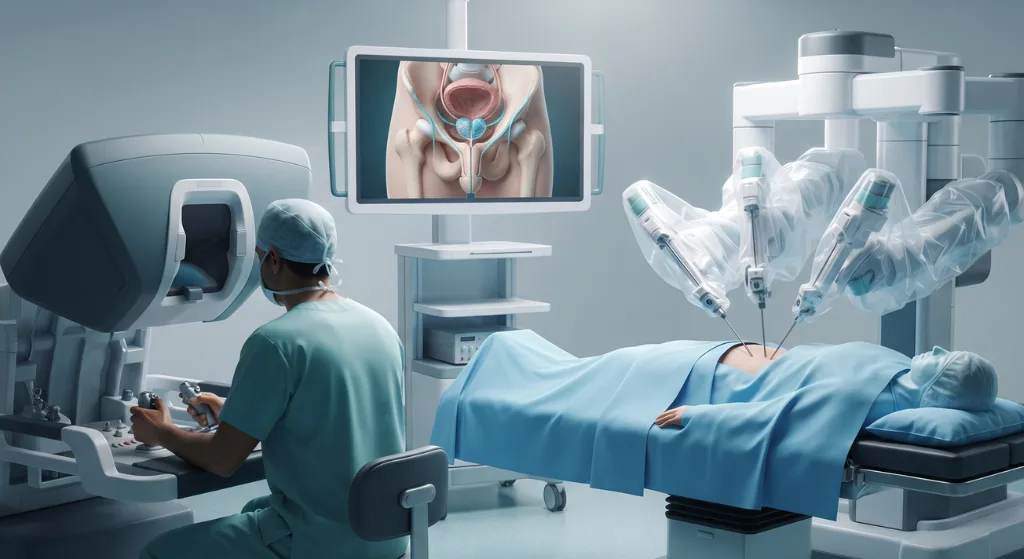
Robotic-assisted radical prostatectomy is a minimally invasive surgical approach used in selected patients with prostate cancer. During the procedure, the surgeon controls robotic instruments through small incisions while viewing the operative field using a magnified three-dimensional camera system. The robotic system does not operate independently; every movement is controlled by the surgeon.
Potential Advantages of Robotic Surgery:
- Smaller abdominal incisions
- Reduced blood loss compared with some open approaches
- Shorter hospital stays in certain circumstances
- Magnified visualisation of surgical anatomy
- Controlled instrument movement during dissection
However, robotic surgery does not guarantee cancer control, preservation of urinary continence or erectile function. Long-term outcomes depend on cancer characteristics, patient factors, surgical technique and clinical team experience. Related Service: Robotic Prostate Cancer Surgery →
4. Radiation Therapy for Prostate Cancer
Radiation therapy uses high-energy radiation to treat prostate cancer. It may be used as a primary treatment for localised disease, combined with hormone therapy in selected higher-risk cases, or following prostatectomy when indicated. Approaches include External Beam Radiation Therapy (EBRT) and Brachytherapy.
Radiation treatment is planned by a radiation oncologist and may be discussed as part of a multidisciplinary cancer treatment plan.
5. Hormone Therapy for Prostate Cancer
Many prostate cancers depend on male hormones, particularly testosterone, for growth. Androgen Deprivation Therapy (ADT) reduces testosterone production or blocks its effects. Hormone therapy may be used alongside radiation therapy for selected intermediate- or high-risk disease, for locally advanced cancers, or for metastatic prostate cancer.
6. Treatment for Advanced or Metastatic Prostate Cancer
When prostate cancer has spread to distant parts of the body, treatment focuses on controlling the disease, prolonging survival where possible and maintaining quality of life. Depending on the patient's condition, options may include androgen deprivation therapy, androgen receptor pathway inhibitors, chemotherapy, selected targeted therapies, radiopharmaceutical treatment for eligible patients, and supportive care.
Robotic vs Open Prostate Cancer Surgery
| Factor | Robotic-assisted surgery | Open surgery |
|---|---|---|
| Surgical access | Several small abdominal incisions | Larger abdominal incision |
| Instrument control | Surgeon-controlled robotic instruments | Direct surgical instruments |
| Visualisation | Magnified 3D camera | Direct or assisted visualisation |
| Blood loss | Often lower in comparative studies | May be greater |
| Hospital stay | May be shorter in selected patients | Varies by recovery |
| Cancer control | Depends on disease and surgical factors | Depends on disease and surgical factors |
| Urinary and sexual outcomes | Not guaranteed | Not guaranteed |
What to Expect Before and After Prostate Cancer Surgery
- Before Surgery: Preoperative assessment may include blood investigations, imaging, anaesthesia evaluation and review of existing medical conditions. The treating team explains the intended surgical procedure, possible complications and expected recovery.
- During Surgery: Radical prostatectomy involves removal of the prostate and seminal vesicles. Lymph node dissection may be performed when indicated. The operation is generally performed under general anaesthesia.
- After Surgery: A urinary catheter is commonly required temporarily while the connection between the bladder and urethra heals. Postoperative care includes pain management, mobilisation, monitoring for complications and instructions for catheter care.
- Recovery and Follow-Up: Recovery varies depending on the procedure and the patient's overall health. Temporary urinary leakage can occur after catheter removal; pelvic floor rehabilitation may help appropriate patients regain urinary control. Erectile function recovery varies and may take time.
Can Prostate Cancer Be Cured?
Many patients with localised prostate cancer can be treated with curative intent. However, outcomes vary according to cancer stage, grade, treatment response and individual health. Some low-risk cancers can be monitored safely through active surveillance rather than treated immediately. Advanced or metastatic prostate cancer is generally managed as a long-term disease using systemic treatment and supportive care.
Prostate Cancer Consultation in Chembur, Mumbai
Patients with an elevated PSA level, abnormal prostate MRI, suspicious biopsy result or confirmed prostate cancer may require specialist evaluation.
Dr. Shyam Mohan provides urological consultations at Synergy Health Clinic, Chembur, Mumbai. During the consultation, patients can discuss their diagnosis, staging investigations and available treatment options.
Bring the following records, if available: Previous PSA blood test reports, prostate MRI reports and images, prostate biopsy or histopathology reports, PSMA PET-CT or other staging scans, previous treatment records, and current medication details.
A clinical review helps determine whether additional investigations, monitoring, surgery or referral for other cancer treatments may be appropriate.
