Bladder Cancer Treatment in Chembur, Mumbai
Blood in the urine, changes in urination or a bladder tumour detected during imaging may require evaluation for bladder cancer. While these findings do not always indicate cancer, identifying the underlying cause is important for timely diagnosis and appropriate treatment.
Dr. Shyam Mohan, Consultant Urologist, Uro-Oncologist and Robotic Surgeon in Chembur, Mumbai, provides evaluation and management of urological cancers, including bladder cancer. Treatment depends on how deeply the tumour has grown into the bladder wall, its grade, spread and the patient's overall health.
Bladder cancer treatment options range from endoscopic resection (TURBT) and intravesical therapies to robotic bladder removal surgery (radical cystectomy) with reconstructive urinary diversion.
A dedicated uro-oncology consultation helps patients and their families understand their diagnosis, staging investigations, and personalised treatment pathways.
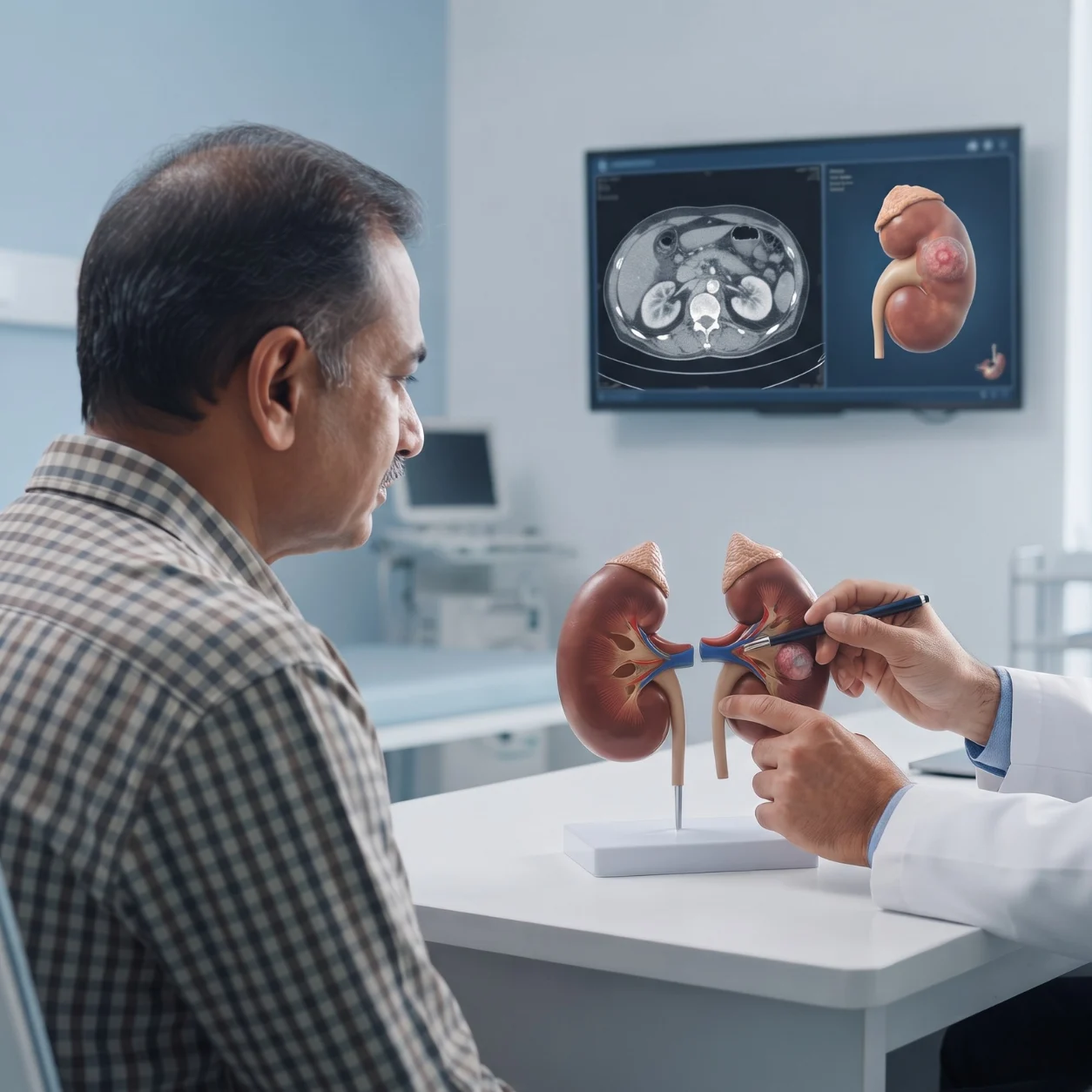
What Is Bladder Cancer?
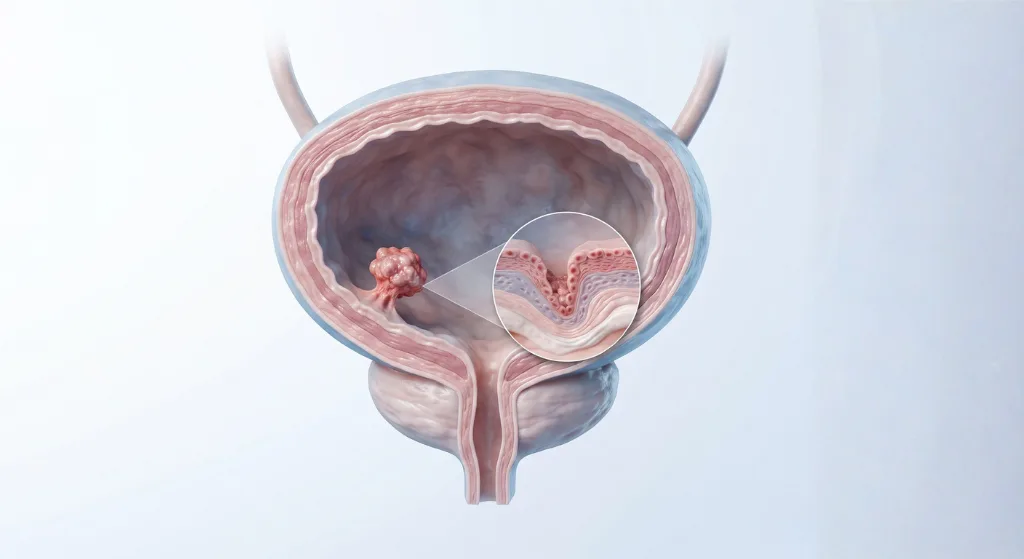
Bladder cancer develops when abnormal cells grow uncontrollably within the urinary bladder. The bladder is a hollow muscular organ located in the lower abdomen whose primary function is to store urine before it is passed out of the body.
Most bladder cancers begin in the urothelial cells lining the inside of the bladder. This type is known as urothelial carcinoma. Bladder cancer may remain limited to the inner layers of the bladder wall or grow deeper into the bladder muscle. In more advanced cases, cancer may spread beyond the bladder to nearby tissues, lymph nodes or distant organs.
The extent of the disease is one of the most important factors in determining treatment.
Types of Bladder Cancer
- Urothelial carcinoma: The most common type, developing from the cells lining the inside of the bladder.
- Squamous cell carcinoma: A less common type that may be associated with long-standing irritation or chronic infections.
- Adenocarcinoma: A rare bladder cancer arising from gland-forming cells.
- Other rare tumours: Including small cell carcinomas and sarcomas requiring individualised assessment.
What Are the Early Signs and Symptoms of Bladder Cancer?
Bladder cancer may cause urinary symptoms, although some people have few symptoms during the early stages.
1. Blood in the Urine (Hematuria)
One of the most common symptoms. Urine may appear pink, red or brown. Sometimes blood is microscopic. Painless blood in the urine should never be ignored, even if it happens only once.
2. Frequent Urination
Needing to urinate much more frequently than usual. Frequent urination can also result from urinary infections, BPH or overactive bladder.
3. Burning or Pain During Urination
Bladder irritation may cause dysuria (discomfort or burning while passing urine). These symptoms require clinical assessment in context.
4. Urinary Urgency & Pelvic Discomfort
A sudden, difficult-to-control urge to urinate or discomfort in the lower abdomen or pelvic region. Persistent symptoms require investigation.
Symptoms of Advanced Bladder Cancer
When bladder cancer advances or spreads beyond the bladder, symptoms may include:
- Persistent pelvic or lower back pain
- Difficulty passing urine or urinary retention
- Unexplained weight loss
- Reduced appetite & increasing fatigue
- Bone pain if cancer has spread to bones
- Leg swelling related to advanced pelvic disease
Individuals experiencing persistent urinary changes should seek comprehensive urological evaluation rather than delaying care.
What Causes Bladder Cancer?
Bladder cancer develops due to genetic changes within bladder cells. These changes may occur over time and can be influenced by environmental and individual risk factors:
Smoking and Tobacco Exposure
Cigarette smoking is one of the most important established risk factors. Harmful substances enter the blood and concentrate in urine, exposing the bladder lining.
Occupational Chemical Exposure
Long-term exposure to certain industrial chemicals, including aromatic amines in dye, paint, chemical and rubber industries, increases risk.
Increasing Age
Bladder cancer becomes much more common with increasing age, though it can also develop in younger adults.
Chronic Irritation & Medical History
Previous pelvic radiation, certain chemotherapies, chronic bladder stones, long-term catheter use or personal/family history of bladder cancer.
Note: Having one or more risk factors does not mean a person will necessarily develop bladder cancer.
How Is Bladder Cancer Diagnosed?
Diagnosing bladder cancer involves identifying suspicious bladder abnormalities, examining tissue and determining whether the disease has spread. Dr. Shyam Mohan recommends investigations based on symptoms and clinical assessment:
1. Medical History and Physical Examination
Reviewing urinary symptoms, smoking history, occupational exposure, previous infections, medications and relevant medical conditions.
2. Urine Examination and Cytology
Urine tests detect red blood cells or infection. Urine cytology checks for shed abnormal malignant cells under a microscope when high-grade urothelial cancer is suspected.
3. Ultrasound KUB & CT Urography
Ultrasound of the kidneys, ureters and bladder (KUB) may identify a bladder mass. CT urography evaluates the entire urinary tract, including the kidneys and ureters, to rule out upper tract lesions and check local extension.
4. Cystoscopy
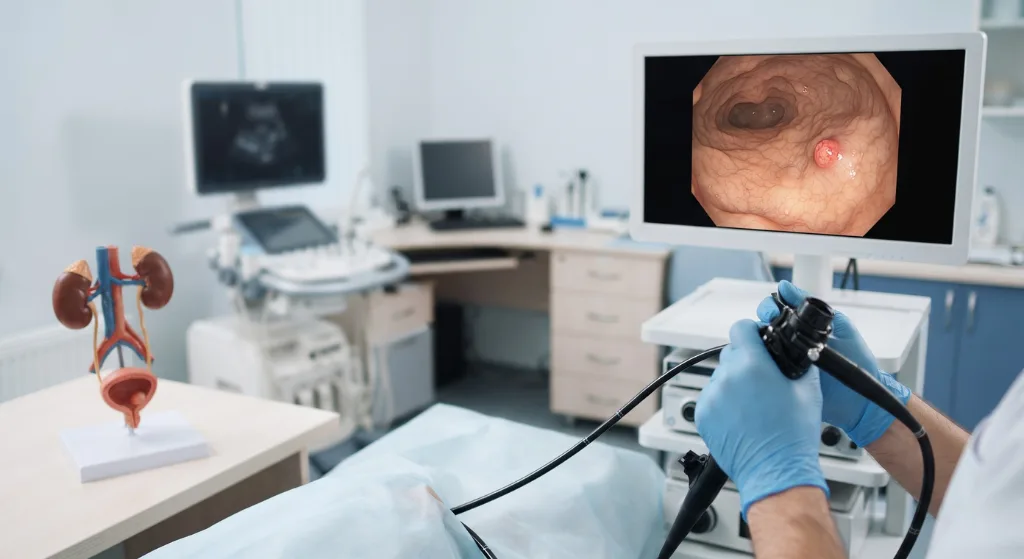
An essential diagnostic investigation where a thin camera instrument (flexible or rigid cystoscope) is introduced through the urethra to directly inspect the lining of the bladder and identify suspicious lesions.
5. Transurethral Resection of Bladder Tumour (TURBT) & Histopathology
TURBT removes visible tumours and collects muscle-containing tissue specimens for microscopic analysis to establish exact tumour type, grade and depth of invasion.
Understanding the Stages of Bladder Cancer
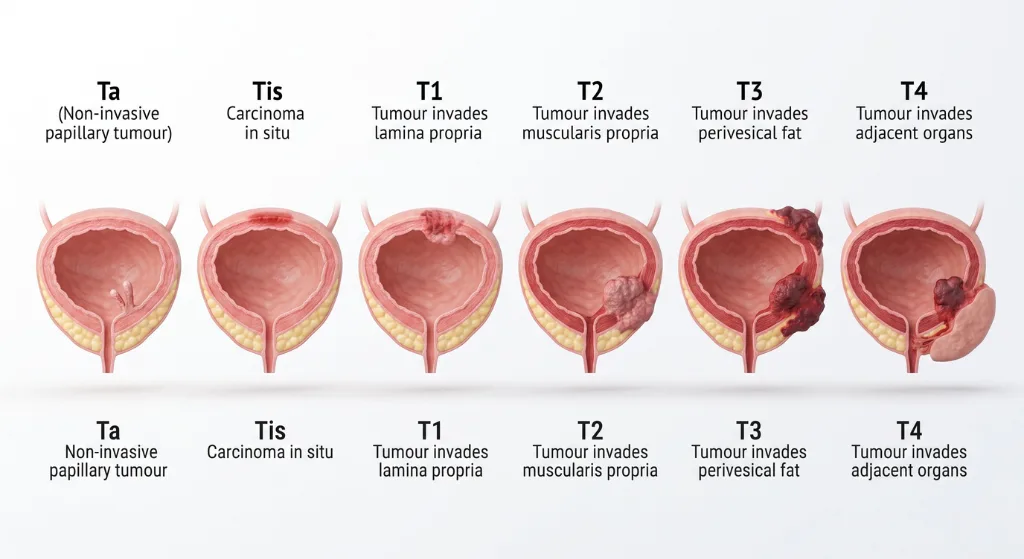
Bladder cancer is classified according to how deeply the tumour has invaded the bladder wall and whether it has spread beyond the bladder:
| Stage | General Description |
|---|---|
| Ta | Non-invasive papillary tumour limited to the inner lining (urothelium) |
| Tis | Carcinoma in situ: a flat high-grade tumour confined to the inner mucosal lining |
| T1 | Cancer invades lamina propria (connective tissue beneath lining), but NOT the bladder muscle |
| T2 | Cancer has invaded the muscular layer of the bladder (Muscle-Invasive Bladder Cancer) |
| T3 | Cancer has extended through the muscle into perivesical fat tissue surrounding the bladder |
| T4 | Cancer has invaded nearby organs (prostate, uterus, vagina or pelvic wall) |
Lymph node involvement (N) and distant metastasis (M) are assessed separately as part of the standard TNM staging system.
Non-Muscle-Invasive Bladder Cancer (NMIBC)
Includes Ta, T1 and Tis. The cancer has not invaded the bladder muscle. Treatment commonly involves TURBT followed by risk-based monitoring or intravesical therapy.
Muscle-Invasive Bladder Cancer (MIBC)
Starts at stage T2. Treatment often requires an intensive approach, including systemic chemotherapy, radical cystectomy or selected trimodality bladder preservation.
Bladder Cancer Treatment Options in Chembur, Mumbai
Treatment options depend on tumour stage, grade, risk of recurrence or progression, and overall patient fitness:
1. TURBT – Transurethral Resection of Bladder Tumour
An endoscopic procedure performed through the urethra to remove visible bladder tumours without skin incisions. Provides essential tissue for histopathological staging and can be definitive for non-muscle-invasive tumours.
2. Intravesical Chemotherapy
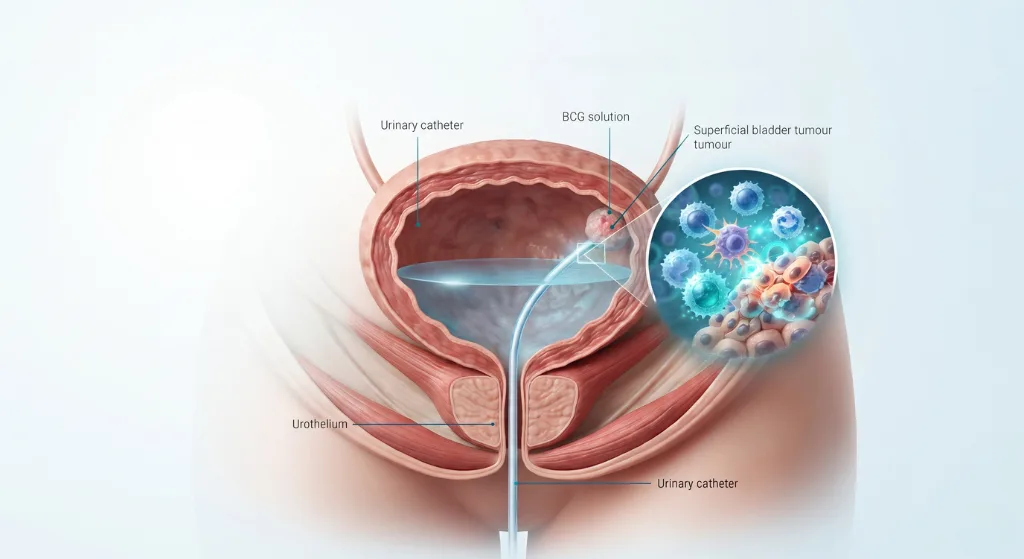
Anticancer medication (e.g., mitomycin C or gemcitabine) delivered directly into the bladder via a catheter after TURBT to reduce the risk of early tumour recurrence.
3. BCG Therapy for Bladder Cancer
Bacillus Calmette-Guérin (BCG) intravesical immunotherapy stimulates the local immune system against cancer cells for intermediate- and high-risk non-muscle-invasive bladder cancer.
4. Radical Cystectomy – Bladder Removal Surgery
Surgical removal of the urinary bladder and pelvic lymph nodes, recommended for muscle-invasive cancer or recurrent high-risk non-muscle-invasive cancer.
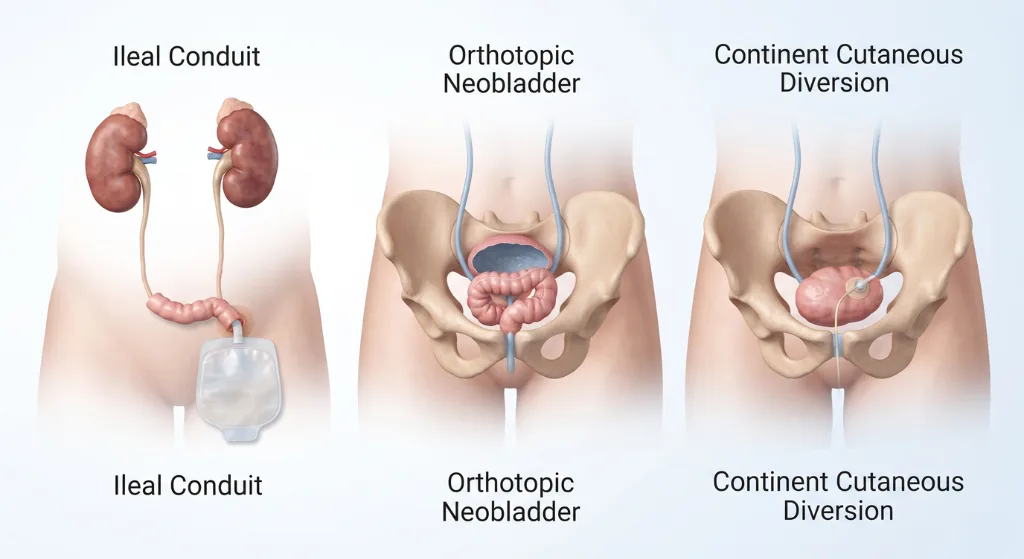
5. Urinary Diversion After Bladder Removal
Creating an alternative pathway for urine storage and drainage after cystectomy:
- Ileal Conduit: Short intestinal conduit leading to an abdominal stoma and external bag.
- Orthotopic Neobladder: An internal reservoir constructed from intestine connected to the urethra in suitable patients.
- Continent Cutaneous Diversion: Internal reservoir catheterised periodically through a small stoma.
6. Robotic-Assisted Bladder Cancer Surgery
Minimally invasive approach using robotic technology through keyhole incisions, offering 3D high-definition magnification and precision during radical cystectomy and pelvic lymphadenectomy.
7. Systemic Chemotherapy, Immunotherapy & Bladder-Preserving Trimodality Therapy
Cisplatin-based combination chemotherapy before or after cystectomy, immune checkpoint inhibitors for advanced cases, or trimodality bladder preservation (maximal TURBT + concurrent chemotherapy and radiation) in carefully selected patients.
TURBT vs Radical Cystectomy – What Is the Difference?
| Factor | TURBT | Radical Cystectomy |
|---|---|---|
| Main purpose | Diagnosis and removal of visible bladder tumour | Removal of the bladder to treat invasive/high-risk cancer |
| Common indication | Non-muscle-invasive bladder cancer and initial staging | Muscle-invasive (T2+) or refractory high-risk disease |
| Surgical approach | Through the urethra (endoscopic, no skin incisions) | Open or robotic-assisted abdominal operation |
| Bladder preserved | Usually yes | No (entire bladder is removed) |
| Urinary diversion | Generally not required | Required (Ileal conduit, Neobladder, etc.) |
| Follow-up | Regular surveillance cystoscopy | Oncological imaging and diversion surveillance |
Can Bladder Cancer Be Treated Without Removing the Bladder?
Yes. Many patients with non-muscle-invasive bladder cancer can be treated while preserving the bladder through TURBT, intravesical chemotherapy and BCG immunotherapy according to risk stratification.
Some selected patients with muscle-invasive bladder cancer may also undergo bladder-preserving trimodality therapy (TURBT + chemotherapy + radiation). However, bladder preservation is not suitable for every tumour; it depends on disease stage, grade, bladder capacity and treatment response.
What Are the Risks of Bladder Cancer Treatment?
Potential complications depend on the chosen modality:
- Bleeding or urinary infection after TURBT
- Bladder perforation during endoscopic resection
- Urinary symptoms and chemical irritation from BCG/chemotherapy
- Systemic BCG infection (rare)
- Infection, bleeding or bowel complications after cystectomy
- Changes in urinary continence after urinary diversion
- Sexual function changes following bladder removal
- Chemotherapy or radiation-related adverse effects
Recovery After Bladder Cancer Surgery
Recovery depends on whether the patient undergoes TURBT or radical cystectomy:
Recovery After TURBT
Many patients are discharged within 24 to 48 hours. Mild blood-tinged urine or burning may persist for several days. A temporary urinary catheter may be placed for 1–2 days.
Recovery After Radical Cystectomy
Major surgery requiring hospital stay, careful pain management, bowel monitoring, early mobilization, nutritional support and stoma/neobladder rehabilitation guidance.
Can Bladder Cancer Come Back After Treatment?
Yes. Bladder cancer has a known rate of recurrence. Lifelong regular follow-up with surveillance cystoscopies and imaging is essential to catch any recurrences early.
Bladder Cancer Consultation in Chembur, Mumbai
Patients with visible blood in the urine, a bladder mass detected on imaging, an abnormal cystoscopy or a confirmed bladder cancer diagnosis may require specialist evaluation.
Dr. Shyam Mohan provides consultations at Synergy Health Clinic, Chembur, Mumbai. During the consultation, patients can discuss their diagnosis, staging investigations, and available treatment pathways.
Bring the following records, if available: Ultrasound KUB or CT scan reports and discs, cystoscopy findings or operative notes, TURBT operative and histopathology reports, previous BCG or chemotherapy records, and current medication details.
