Laser Prostate Surgery in Mumbai
Laser prostate surgery treats a blockage caused by an enlarged prostate, also called benign prostatic hyperplasia (BPH). One technique is holmium laser enucleation of the prostate (HoLEP). The surgeon passes a fine instrument through the urinary opening and uses a laser to remove the inner prostate tissue pressing on the urine passage. This creates more room for urine to flow, without a cut on the abdomen.
Dr. Shyam Mohan evaluates men with urinary symptoms at Synergy Health Clinic in Chembur, Mumbai. If you are considering surgery, the first question is whether prostate blockage explains the problem you want treated. A weak stream, difficulty emptying the bladder and waking several times at night can have different causes. This distinction matters because surgery may improve the stream while urgency or nighttime urination continues.
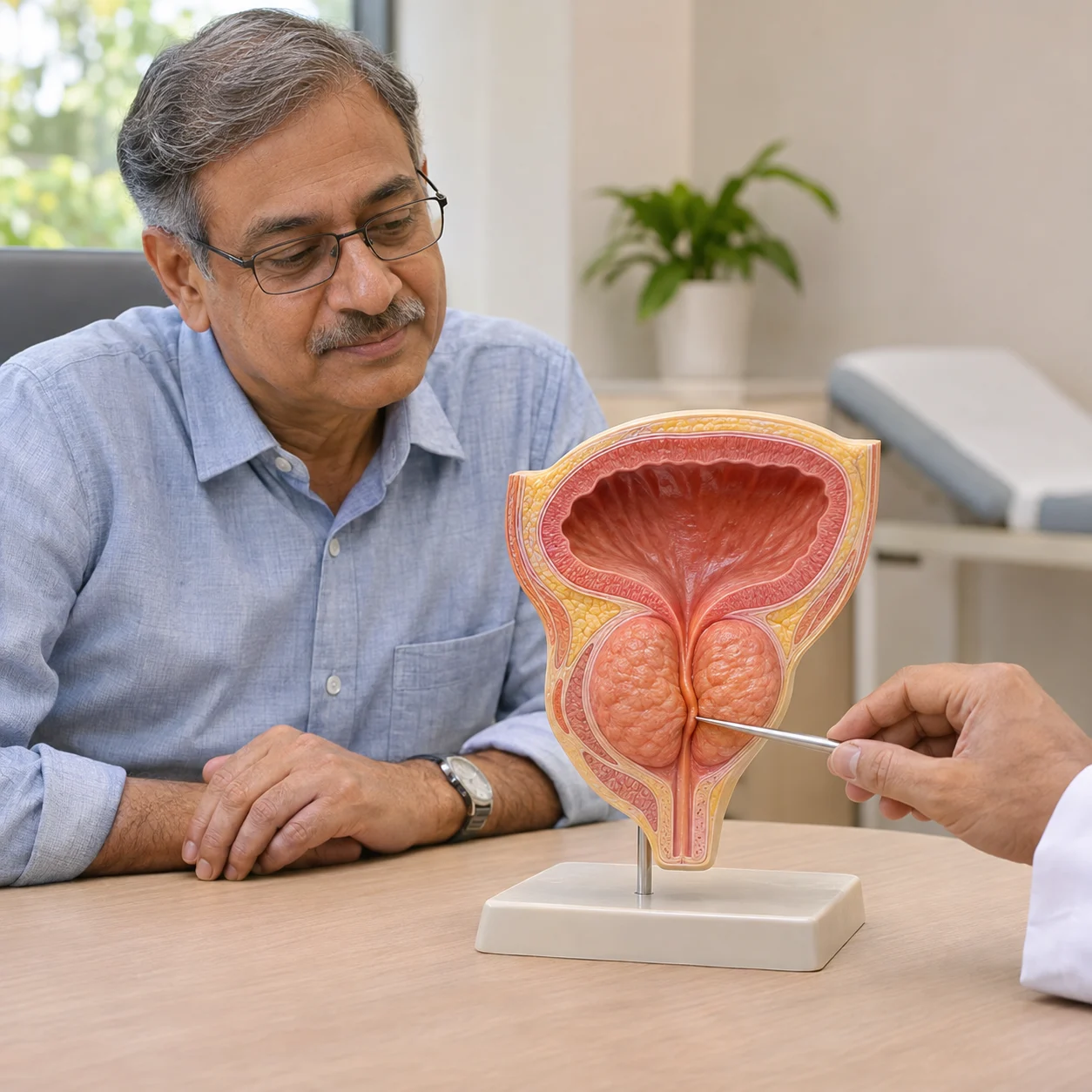
When is laser surgery considered for an enlarged prostate?
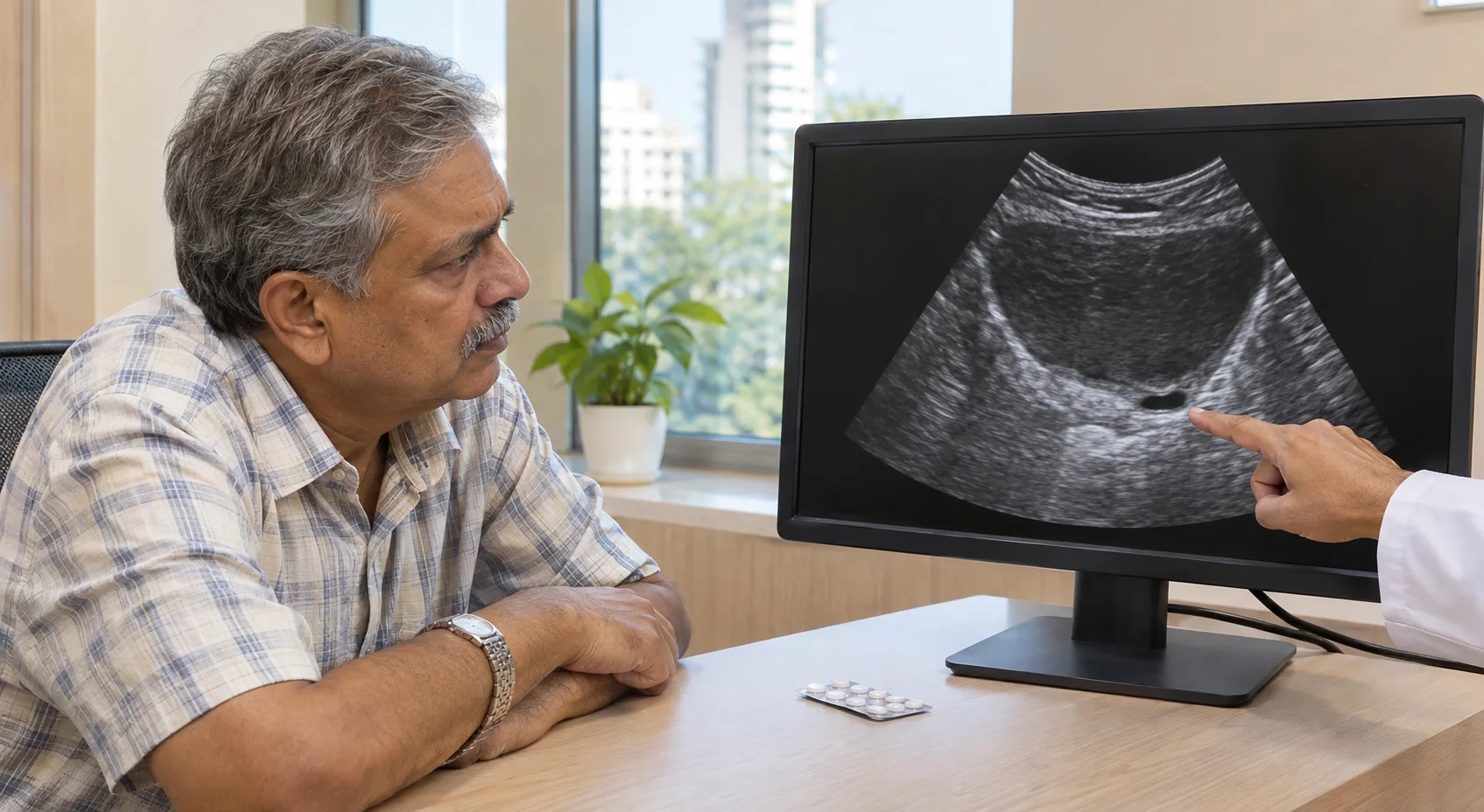
Your urologist may discuss surgery if a weak or interrupted stream, straining, or difficulty emptying your bladder continues to disrupt daily life despite medication. Surgery may also be considered when prostate blockage causes any of the following.
Repeated urinary retention
You have needed a catheter more than once, or you cannot pass urine when the catheter is removed.
Recurring urinary infections or bladder stones
Tests suggest that difficulty emptying the bladder is contributing to the problem.
Pressure affecting the kidneys
Tests show that the blockage is causing swelling in the urinary tract or affecting kidney function.
An ultrasound report showing a large prostate is only one part of this decision. If you empty your bladder adequately and your symptoms are manageable, monitoring or medication may still be appropriate. If you suddenly cannot pass urine at all, seek urgent medical care.
What tests are needed before HoLEP?
Flow and Residual Tests
Two tests help answer different questions. Uroflowmetry measures how quickly urine comes out when you pass urine. A post-void residual scan measures how much urine remains in your bladder immediately afterwards. Your urologist interprets both alongside your symptoms, because a slow stream can also occur when the bladder muscle contracts weakly.
Clinical Evaluation and Imaging
The assessment may also include a urine test, a prostate examination and an ultrasound to measure prostate size. Your urologist may discuss a PSA blood test if the result would change your care. Bring your previous reports and a list of medicines, including blood thinners, so the team can plan safely if you decide on surgery.
How is HoLEP performed?
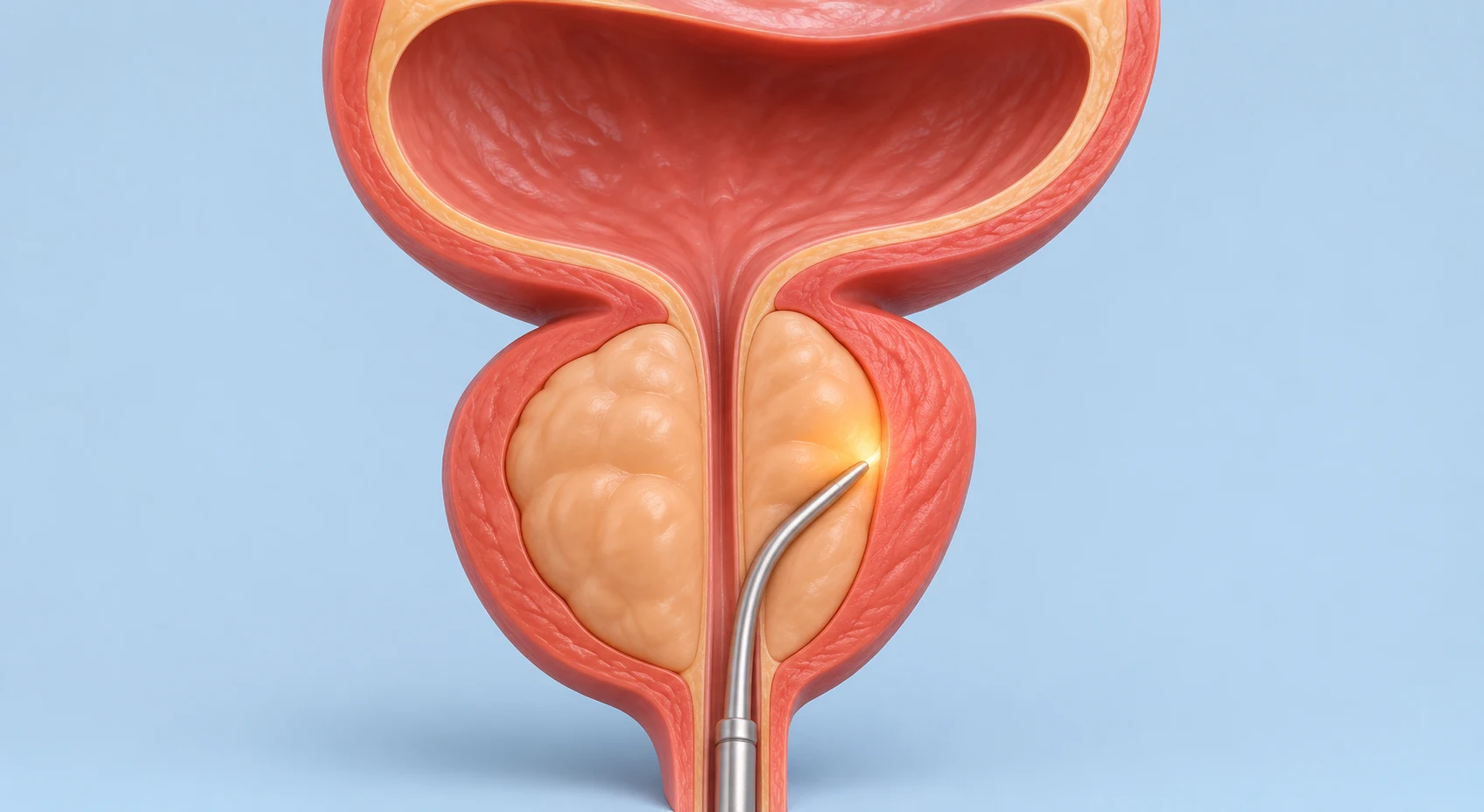
HoLEP is usually performed under spinal or general anaesthesia. The surgeon guides a telescope through the urethra, the tube that carries urine out of the body. A laser separates the enlarged inner tissue from the outer part of the prostate. The surgeon then breaks the freed tissue into smaller pieces inside the bladder and removes it through the telescope. The tissue can be sent for laboratory examination.
A temporary catheter drains the bladder while the area begins to heal. After the catheter is removed, the team checks whether you can pass urine and empty your bladder adequately.
How do HoLEP, laser vaporisation and TURP differ?
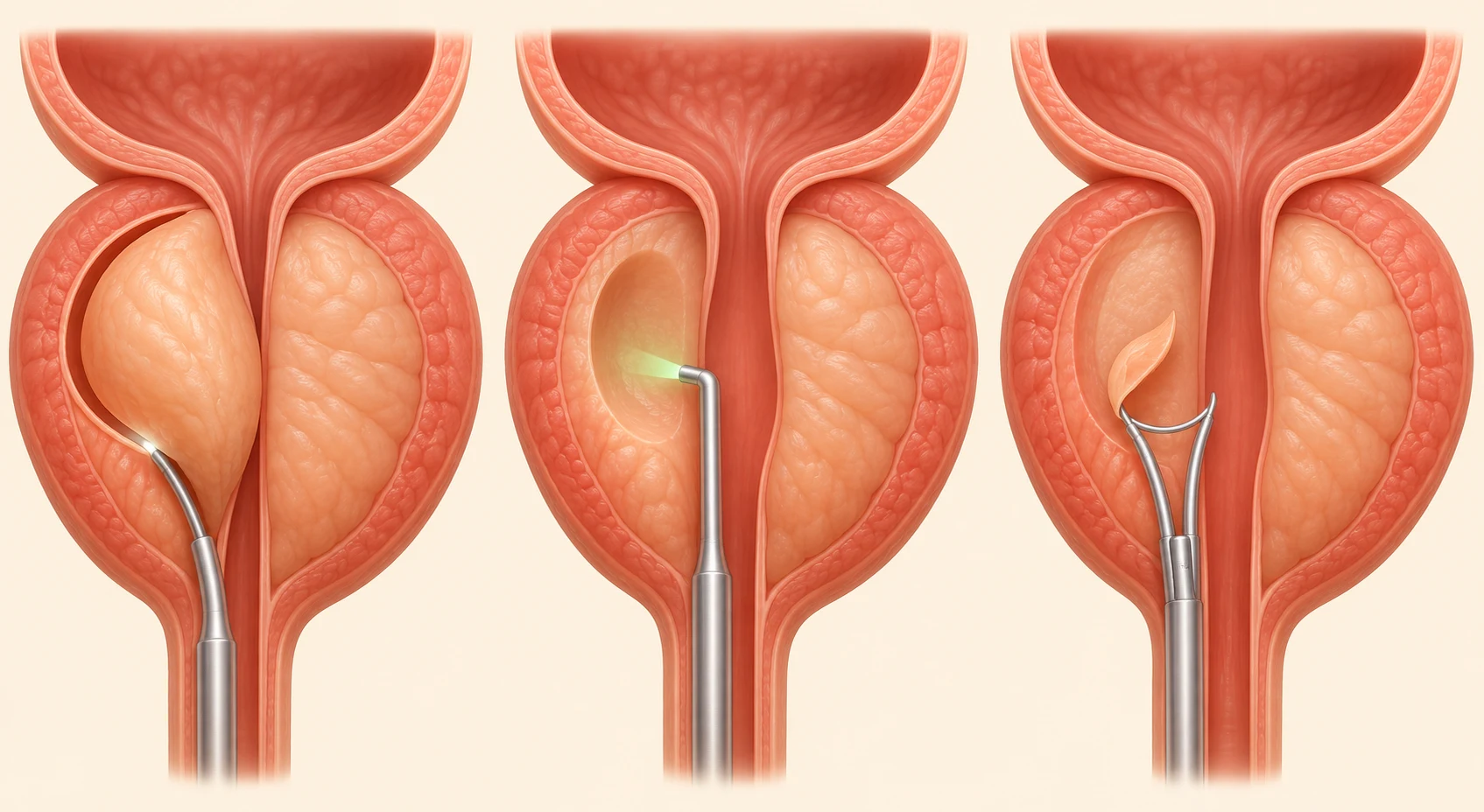
| Procedure | How it opens the urine passage | What to discuss |
|---|---|---|
| HoLEP | A holmium laser separates the obstructing tissue, which the surgeon removes. | HoLEP can be considered across a range of prostate sizes, including larger glands. The removed tissue can be examined. |
| Laser vaporisation (PVP) | A laser vaporises tissue to widen the channel. | Bleeding risk and the need for a tissue sample can influence whether this option is suitable. |
| Transurethral resection of the prostate (TURP) | A small electrical loop removes pieces of obstructing tissue through the urethra. | TURP is another established option. Prostate size, medical history and the risks that matter to you help guide the choice. |
What is recovery like after laser prostate surgery?
After HoLEP, the catheter commonly stays in place for one to three days. Some men need it for longer. Once it is removed, you may notice a stronger stream quite quickly. Burning, bladder urgency, light bleeding or temporary urine leakage can still occur while the area heals. Urgency may take weeks or sometimes months to settle.
Many patients feel ready for desk work after about one to two weeks. If your work involves lifting, ask for a separate return-to-work plan. Before discharge, check when you can resume exercise and whom to contact if symptoms worsen. Seek urgent medical care if you cannot pass urine, develop heavy bleeding or pass large clots. Contact your treating team promptly if you develop a fever or worsening pain.
What are the risks and sexual side effects?
A dry orgasm is common after HoLEP. You may still feel an orgasm but see little or no semen come out. This change can be lasting and can affect fertility. Erections and ejaculation are separate functions. If having children or preserving ejaculation matters to you, discuss this before choosing a procedure.
Other risks include infection, bleeding that needs treatment, persistent urine leakage and scar tissue that narrows the urine passage. Your own risk depends partly on bladder function, previous procedures and your health before surgery.
How much does laser prostate surgery cost in Mumbai?
For a figure you can use to plan, request a written estimate from the hospital where the procedure would take place. Ask whether it covers the surgeon’s and anaesthetist’s fees, operating theatre charges, laser consumables, room stay, tissue examination and follow-up. If you have insurance, check your room entitlement, pre-authorisation and expected out-of-pocket amount before admission.
Frequently asked questions
Urology consultation in Chembur, Mumbai

Dr. Shyam Mohan
For an overview of symptoms, tests and medicines, see Prostate Enlargement Treatment in Chembur.
Clinical reference sources
- BAUS – Holmium Laser Enucleation of the Prostate (HoLEP) Patient Information Leaflet
- EAU Guidelines – Management of Non-Neurogenic Male LUTS (Disease Management & Diagnostic Evaluation)
- Cambridge University Hospitals (CUH) – HoLEP Patient Information