Ureteroscopy (URS/URSL) in Mumbai
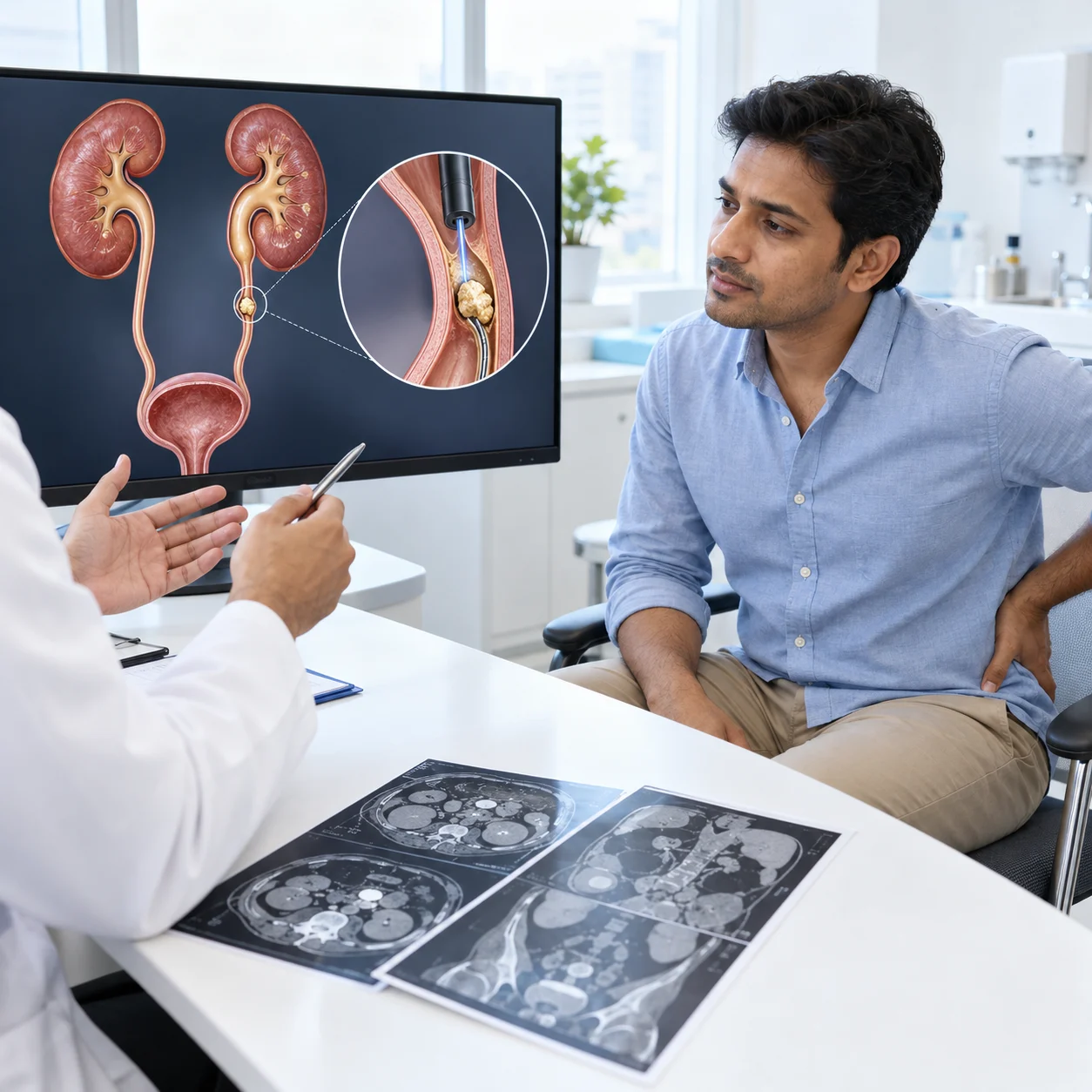
A ureteric stone is a stone lodged in the tube that carries urine from the kidney to the bladder. Some stones pass on their own. If a stone stays in place, blocks urine flow or keeps causing pain despite treatment, a urologist may recommend ureteroscopy (URS). The surgeon passes a thin scope through the urinary opening to reach the stone. If the surgeon breaks it into smaller pieces through the scope, the procedure is called ureteroscopic lithotripsy (URSL).
Dr. Shyam Mohan, Consultant Urologist, Uro-Oncologist and Robotic Surgeon in Mumbai, sees patients with ureteric stones at Synergy Health Clinic in Chembur. During consultation, he can review your scan and explain whether it is reasonable to wait for the stone to pass or consider treatment.
When to seek urgent care:
If you have a known or suspected stone and develop fever or chills with pain in your side, go to the nearest emergency department. An infection behind a blocked ureter can become serious quickly. You may need antibiotics and urgent drainage of the kidney, with stone removal planned after the infection settles.
When is ureteroscopy needed for a ureteric stone?
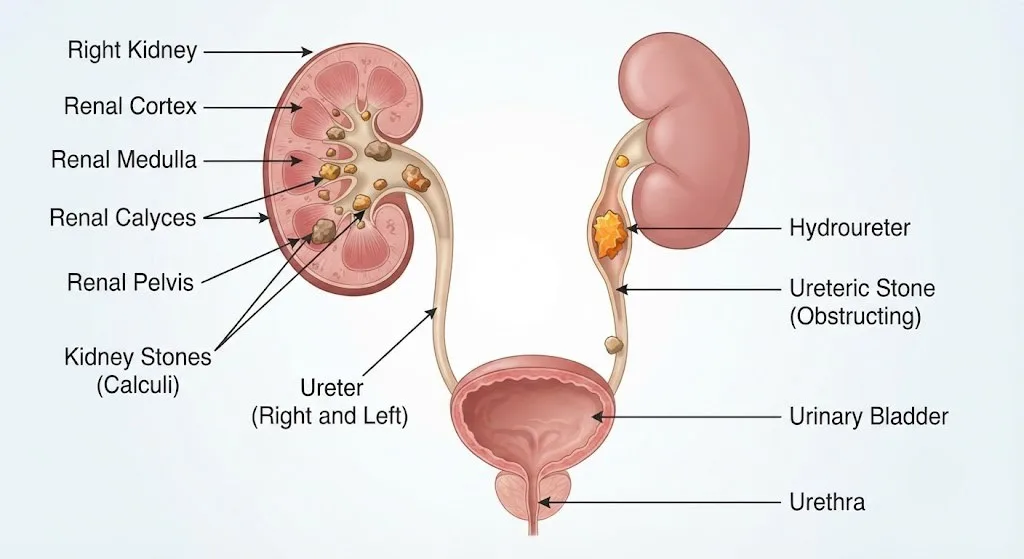
Two details on your scan matter when deciding whether to wait: how large the stone is and where it is lodged. A small stone close to the bladder generally has a better chance of passing than one of the same size higher up. Your symptoms, kidney function and any signs of infection also influence the decision.
Your urologist may discuss stone removal if:
- The stone is unlikely to pass on its own.
- Pain continues despite prescribed pain relief.
- A follow-up scan shows that the stone is still blocking urine flow.
- The blockage is affecting kidney function, particularly if you have only one functioning kidney.
If it is safe to wait, ask when to have a follow-up scan. If you need treatment, shock wave lithotripsy (SWL) may also be an option. SWL uses shock waves from outside the body to break the stone. URS lets the surgeon reach the stone directly and may reduce the need for repeat treatment, although it carries a higher risk of complications than SWL.
What happens before URSL?
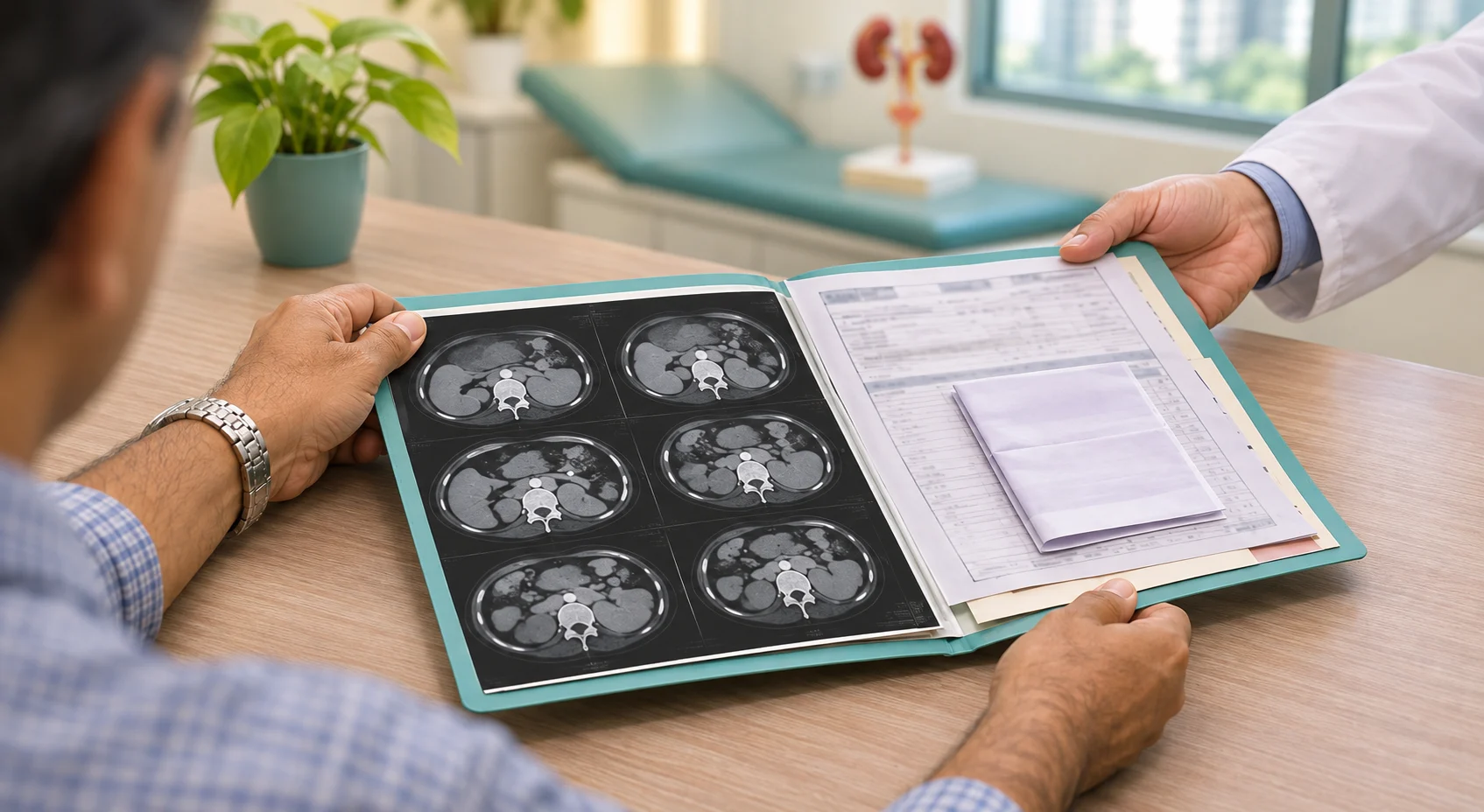
Bring your ultrasound or CT KUB images and report, recent urine and blood test results, and a list of medicines you take. Tell the urologist if you take blood thinners or have had a urine infection, a ureteric stent or previous stone surgery. These details help the team plan the procedure and give you instructions specific to your medicines.
Your urologist checks for urinary infection before planned stone surgery. If testing shows an infection, you may need treatment before URSL. The hospital team will also explain the anaesthetic and tell you when to stop eating and drinking.
How is ureteroscopic stone removal performed?
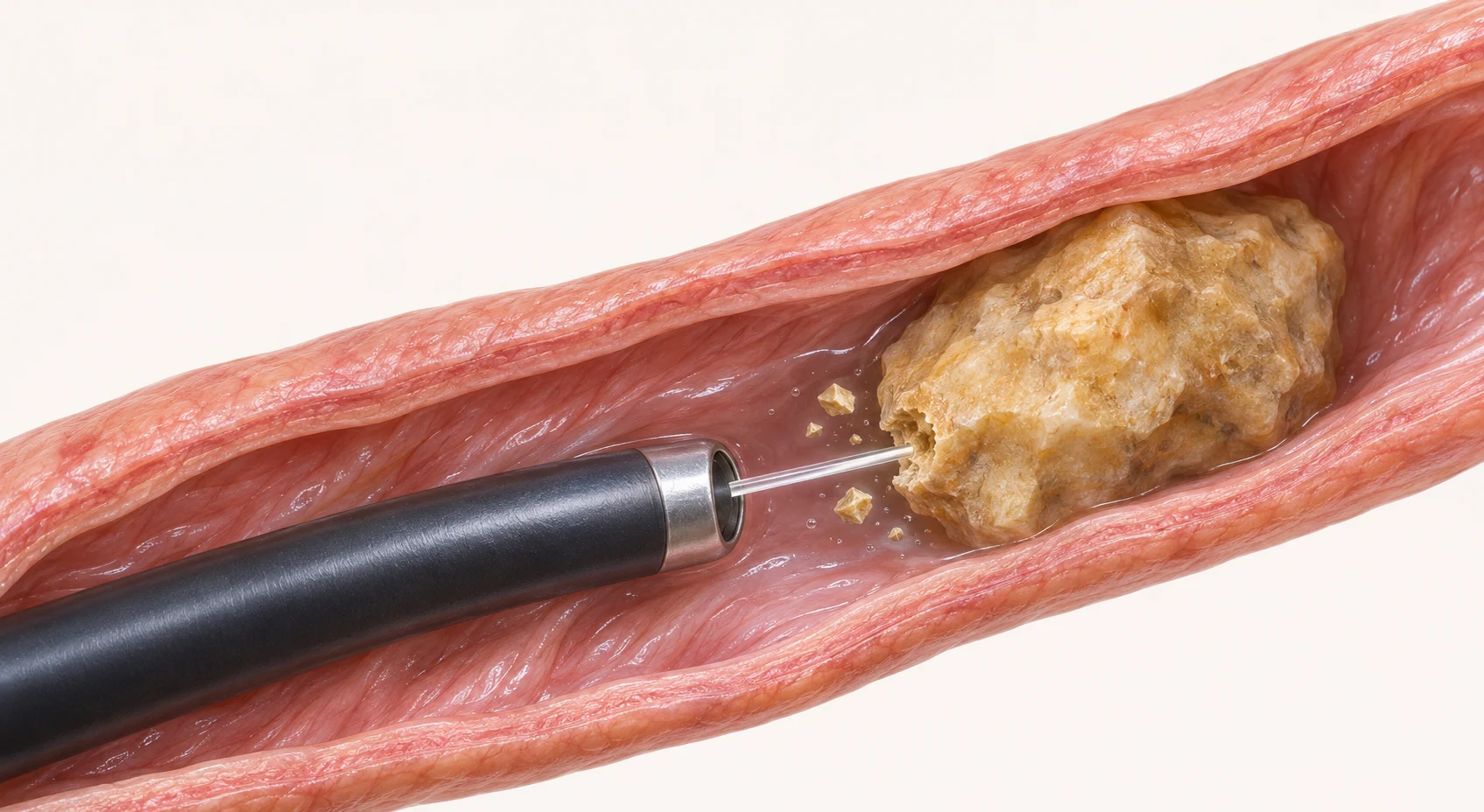
URS usually takes place under general anaesthesia. The surgeon guides a narrow telescope through the urethra, into the bladder and then up the affected ureter. This route allows the surgeon to see the stone without making a skin incision.
A small stone may come out in a tiny retrieval basket. For a larger stone, the surgeon commonly uses a laser to break it up. Some fragments can be removed during the procedure. Very fine particles may pass later in the urine. If the ureter is too narrow to reach the stone safely, the surgeon may place a temporary stent and arrange a second procedure.
Will I need a DJ stent after ureteroscopy?
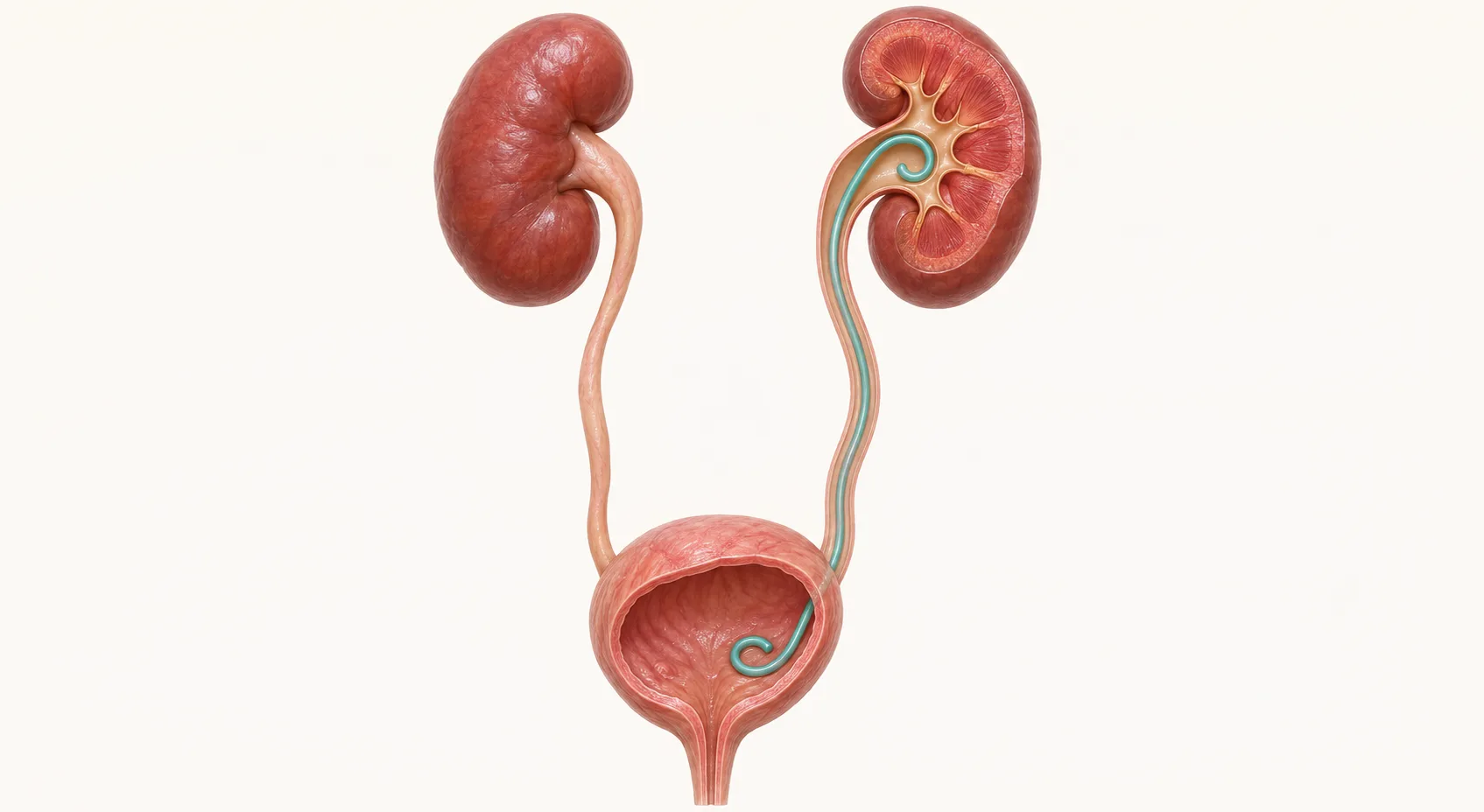
A double-J (DJ) stent is a thin, flexible tube that sits inside the ureter and helps urine drain from the kidney to the bladder. Some people can go home without one after an uncomplicated URS. Your surgeon may recommend a stent if there is swelling, an injury to the ureter or a plan to treat remaining fragments.
While the stent is in place, you may need to urinate more often or feel an ache in your side when you pass urine. Before discharge, ask for your stent removal date, how it will be removed and whom to contact if the appointment is delayed. Keep the appointment even if you feel well.
Recovery after ureteroscopy
Many patients go home the same day or the following morning. Mild burning when passing urine, a pink tinge to the urine and discomfort in the side can occur during early recovery. Your discharge plan should explain pain relief, when you can resume work and whether you need imaging to check for remaining stones.
Possible complications include infection, bleeding, injury to the ureter and fragments that need further treatment. Occasionally, scar tissue can narrow the ureter later. Seek urgent care if you develop fever or chills, cannot pass urine, have heavy bleeding or have worsening pain despite the prescribed medicine.
What affects the cost of URSL in Mumbai?

The estimate depends on the treating hospital, anaesthesia, equipment used to break or retrieve the stone, length of stay and whether treatment takes one or two procedures. If a DJ stent is planned, ask whether the written estimate includes both stent placement and removal. It is also worth checking which preoperative tests and follow-up scans are billed separately.
Frequently asked questions
Ureteric stone consultation in Chembur, Mumbai

Dr. Shyam Mohan
MBBS, MS (General Surgery), MCh (Urology)