Robotic Prostatectomy in Mumbai – Robot-Assisted Prostate Cancer Surgery
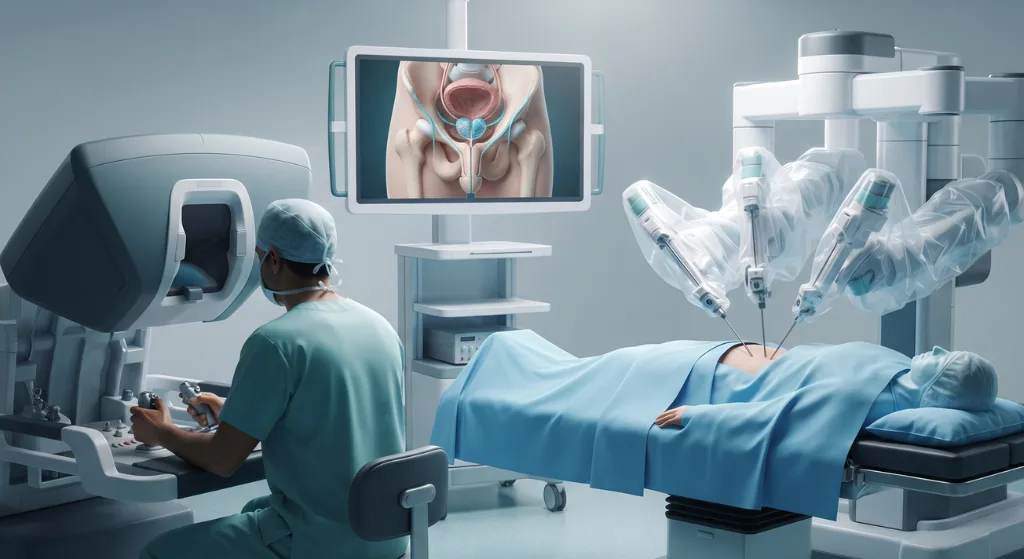
Robotic prostatectomy is a minimally invasive surgical procedure used to remove the prostate gland, most commonly for treating localised prostate cancer. It uses robotic-assisted technology that allows the surgeon to operate through small incisions with magnified 3D vision and precise instrument movements.
Dr. Shyam Mohan, Consultant Urologist, Uro-Oncologist and Robotic Surgeon in Mumbai, evaluates patients with prostate cancer and provides surgical treatment planning based on cancer stage, PSA levels, biopsy findings, imaging results and overall health.
With qualifications including MBBS, MS (General Surgery), MCh (Urology) and a Fellowship in Advanced Robotic Uro-Oncology, Dr. Shyam Mohan focuses on individualised surgical planning, cancer control and preservation of urinary and sexual function whenever clinically feasible.
Clinical Evaluation Note:
Not every patient with prostate cancer requires surgery. Active surveillance, radiotherapy, hormone therapy, and multimodal approaches may be more appropriate in certain circumstances. Treatment is individualised following comprehensive staging and clinical evaluation.
What Is Robotic Prostatectomy?
Robotic prostatectomy, also known as robot-assisted radical prostatectomy (RARP), is a surgical technique used to remove the prostate gland and seminal vesicles in selected patients with prostate cancer.
During surgery, the surgeon controls robotic instruments from a console. These instruments reproduce the surgeon's hand movements with enhanced dexterity, allowing careful dissection around the prostate, urinary sphincter and surrounding nerves.
The robotic system does not operate independently. Every surgical movement is controlled by the surgeon.
Unlike open prostate surgery, which requires a larger incision, robotic prostatectomy is usually performed through several small abdominal incisions.
The aim is to remove cancer while preserving urinary continence and erectile function where possible. However, these functional outcomes cannot be guaranteed.
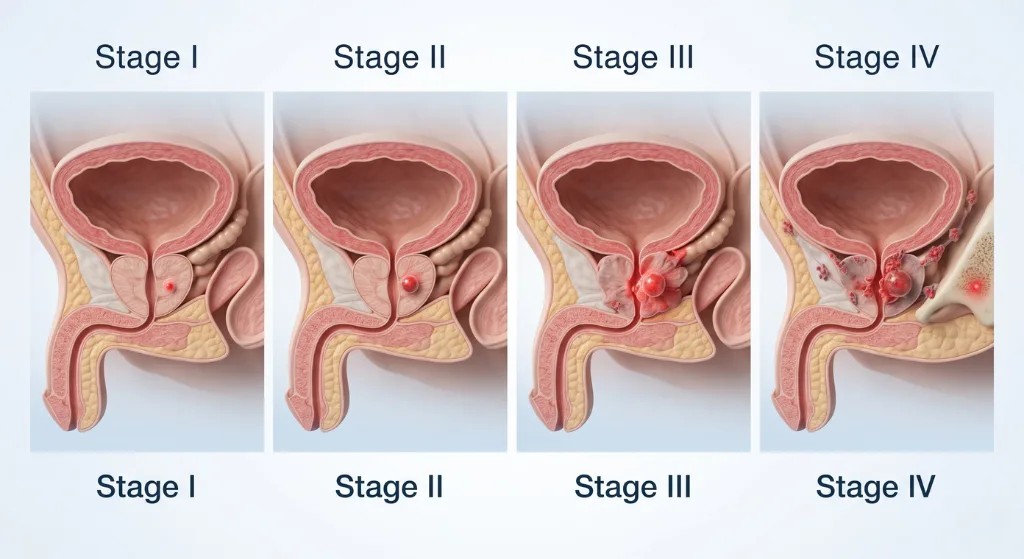 Diagrammatic representation of localized prostate cancer and surrounding pelvic anatomy
When Is Robotic Prostatectomy Recommended?
Robotic radical prostatectomy may be considered for patients with localised prostate cancer and selected patients with locally advanced disease.
The decision depends on the cancer's characteristics, the patient's general health, life expectancy and treatment preferences.
Patients who may be considered for robotic prostatectomy
- Men diagnosed with clinically significant localised prostate cancer.
- Selected patients with locally advanced prostate cancer as part of a multimodal treatment plan.
- Patients whose cancer characteristics make active surveillance less appropriate.
- Patients who are medically fit for general anaesthesia and major surgery.
- Patients who prefer surgical treatment after discussing alternatives, benefits and risks.
Not every patient with prostate cancer requires surgery. Active surveillance, radiotherapy, hormone therapy and other treatment approaches may be more appropriate in certain circumstances.
How Is Robotic Prostatectomy Performed?
The procedure typically involves the following stages:
1. Preoperative Evaluation
Before surgery, the urologist reviews PSA levels, prostate biopsy results, Gleason score or Grade Group, imaging and general fitness for anaesthesia. MRI and additional staging investigations may be recommended depending on cancer risk.
2. General Anaesthesia and Positioning
The procedure is performed under general anaesthesia. The patient is carefully positioned to allow safe access to the pelvis.
3. Small Abdominal Incisions
Several small incisions are made to insert the camera and robotic surgical instruments.
4. Removal of the Prostate
The surgeon carefully separates and removes the prostate gland and seminal vesicles. Pelvic lymph nodes may also be removed when indicated by the patient's cancer risk.
5. Urinary Reconstruction
After prostate removal, the bladder is connected to the remaining urethra. A urinary catheter is placed to support healing.
6. Postoperative Monitoring
The patient is monitored for pain, bleeding, urinary drainage and recovery from anaesthesia. The removed tissue is sent for histopathological examination.
The surgical technique may vary according to prostate size, previous operations, cancer extent and individual anatomy.
Potential Benefits of Robotic Prostatectomy
Robotic surgery offers technical advantages that may improve certain aspects of surgical recovery compared with traditional open surgery.
Magnified 3D Surgical Vision
Provides a detailed view of the prostate, blood vessels and surrounding structures.
Precise Instrument Control
Robotic instruments provide wrist-like movement in confined pelvic spaces.
Potentially Reduced Blood Loss
Compared with open surgery, robotic prostatectomy is generally associated with lower intraoperative blood loss.
Potentially Shorter Hospital Stay
Selected patients may experience shorter hospitalisation and earlier recovery than after open surgery.
Smaller Surgical Incisions
The minimally invasive approach usually causes less abdominal wall disruption than open surgery.

These are potential advantages, not guaranteed outcomes. Long-term cancer control and urinary or sexual function depend on several factors, including tumour characteristics, baseline function and surgical technique.
Nerve-Sparing Robotic Prostatectomy
Nerve-sparing prostatectomy is a surgical approach that aims to preserve the nerves involved in erectile function while removing the cancerous prostate.
These nerves run close to the prostate gland and may be affected during surgery. Depending on the tumour's location and extent, the surgeon may consider preserving nerves on one or both sides.
Nerve-sparing surgery may not be suitable for every patient. If cancer is suspected near the nerve bundles, more extensive tissue removal may be necessary to achieve adequate cancer clearance.
Even with successful nerve preservation, erectile dysfunction may occur after surgery. Recovery depends on age, preoperative erectile function, other medical conditions and the extent of nerve preservation.
Robotic vs Open Prostatectomy: What Is the Difference?
Both robotic and open radical prostatectomy aim to remove prostate cancer. The main difference is the surgical approach.
| Feature | Robotic Prostatectomy | Open Prostatectomy |
|---|---|---|
| Incisions | Several small incisions | One larger incision |
| Surgical vision | Magnified 3D camera | Direct surgical view |
| Blood loss | Generally lower | May be higher |
| Hospital stay | Often shorter | May be longer |
| Recovery | May allow earlier mobilisation | May require longer initial recovery |
| Cancer control | Depends on cancer and surgery | Depends on cancer and surgery |
| Urinary and sexual outcomes | Not guaranteed | Not guaranteed |
The most suitable technique depends on cancer stage, anatomy, surgical expertise, available facilities and patient preferences.
Recovery After Robotic Prostatectomy
Recovery varies between patients. Hospital stay, catheter removal and return to daily activities depend on the surgical procedure and postoperative progress.
First 1–2 days — Hospital Recovery
Pain management, catheter monitoring, early mobilisation and assessment for complications. Some patients require a longer stay.
Around 1–2 weeks — Catheter Removal
The urinary catheter is commonly removed after approximately 7–14 days, depending on healing and the surgeon's assessment.
Weeks 2–4 — Gradual Return to Routine
Light activities and walking are gradually increased. Driving and work depend on comfort, medication use and medical clearance.
Weeks 4–6+ — Physical Recovery
Many patients can progressively resume more activities, while strenuous exercise and heavy lifting require surgical clearance.
Following months — Functional Recovery and Follow-Up
Urinary continence and erectile function may improve over several months or longer. Regular PSA testing is essential.
These are general recovery estimates, not a personalised recovery schedule. Always follow individual advice from your treating surgical team.
Urinary Control and Sexual Function After Surgery
Two important concerns following radical prostatectomy are urinary continence and erectile function.
Urinary Incontinence
Temporary urine leakage is common after catheter removal. Most patients experience improvement over time, although some may have persistent urinary incontinence.
Pelvic floor muscle exercises may be recommended before or after surgery under professional guidance.
Erectile Dysfunction
Erectile function can be affected because the nerves responsible for erections lie close to the prostate. Recovery depends on nerve preservation, age, baseline function and vascular health.
Selected patients may benefit from a supervised penile rehabilitation programme, which can include medication or other treatments.
Fertility After Prostatectomy
Radical prostatectomy prevents natural ejaculation and generally results in infertility. Patients who wish to have biological children in the future should discuss sperm banking before surgery.
Risks and Possible Complications
Although robotic prostatectomy is minimally invasive, it remains a major surgical procedure.
Possible complications include:
- Bleeding or infection
- Injury to surrounding organs or tissues
- Urine leakage from the bladder-urethra connection
- Urinary incontinence
- Erectile dysfunction
- Blood clots
- Scar tissue causing narrowing at the urinary connection
- Anaesthesia-related complications
- Need for conversion to open surgery in uncommon circumstances
Patients should discuss individual surgical risks, expected functional outcomes and alternative treatment options before giving informed consent.
Tests Required Before Robotic Prostatectomy
A complete preoperative assessment helps determine cancer stage and suitability for surgery.
| Investigation | Purpose |
|---|---|
| PSA blood test | Assesses prostate-specific antigen levels |
| Prostate biopsy | Confirms cancer diagnosis and Grade Group |
| Multiparametric MRI | Evaluates tumour location and local extent |
| PSMA PET/CT | May be recommended for staging in selected risk groups |
| Blood tests | Assess blood count, kidney function and other parameters |
| ECG and anaesthesia evaluation | Assess fitness for surgery |
| Urine tests | Identify infection or other urinary concerns |
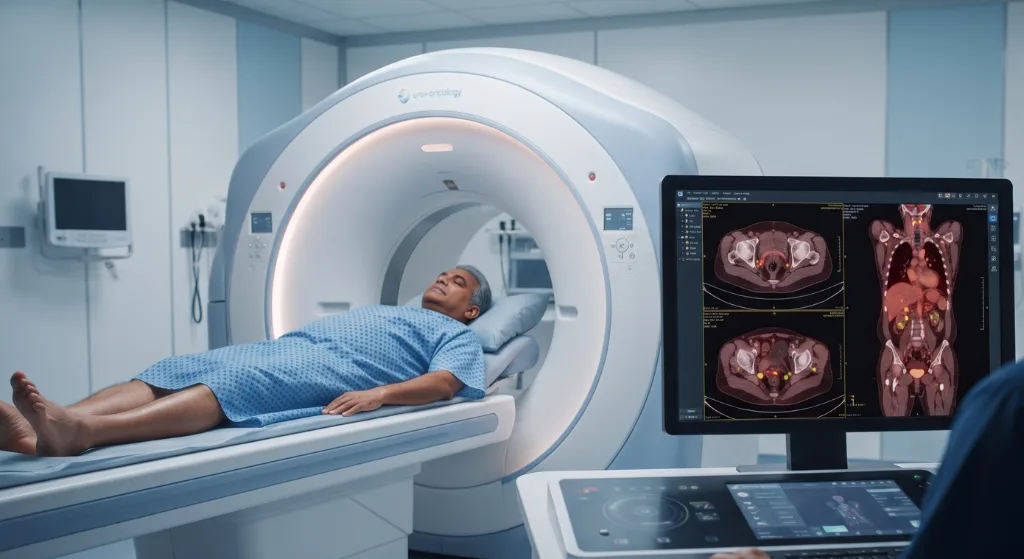 Advanced imaging techniques such as multiparametric MRI and PSMA PET/CT guide precise staging
Not every patient requires every investigation. Testing is selected according to the patient's clinical findings and cancer risk.
Robotic Prostatectomy Cost in Mumbai
The cost of robotic prostatectomy in Mumbai varies according to the hospital, robotic system, complexity of surgery and individual treatment requirements.
Factors that may influence the total cost include:
- Hospital and operating theatre charges
- Robotic surgical equipment and consumables
- Surgeon and anaesthesia fees
- Preoperative tests and imaging
- Requirement for pelvic lymph node dissection
- Hospital room category and length of stay
- Postoperative medications and follow-up care
- Insurance coverage and applicable policy conditions
A written estimate should be requested after clinical evaluation. Patients should confirm what is included in the package and whether additional charges may apply.
Why Consult Dr. Shyam Mohan for Robotic Prostatectomy in Mumbai?
Consultant Urologist, Uro-Oncologist & Robotic Surgeon
Dr. Shyam Mohan provides evaluation and surgical treatment planning for patients with prostate cancer in Mumbai.
His professional background includes:
- MBBS, MS (General Surgery) and MCh (Urology).
- Fellowship training in Advanced Robotic Uro-Oncology.
- Training in robotic and laparoscopic urological procedures, including radical prostatectomy.
- Clinical interest in prostate cancer and other urological cancers.
- Individualised assessment of cancer stage, treatment options and surgical suitability.
- Discussion of postoperative recovery, urinary function, sexual health and follow-up requirements.
His official professional profile documents fellowship training in uro-oncology and robotic surgery at HCG Cancer Centre, Ahmedabad.
The treatment approach is guided by the patient's diagnosis, medical condition, preferences and available surgical options.
Robotic Prostatectomy Consultation in Chembur, Mumbai
Patients seeking information about robotic prostatectomy in Mumbai can consult Dr. Shyam Mohan for assessment of their prostate cancer diagnosis, available treatment options and surgical suitability.
Preparing for Your Consultation
Bring your PSA reports, prostate biopsy and histopathology results, MRI or PET/CT reports, current medications and details of previous procedures.
It is also helpful to prepare questions about cancer control, surgical risks, nerve preservation, urinary continence, erectile function, treatment costs and expected recovery.
