PCNL Surgery in Mumbai for Large Kidney Stones
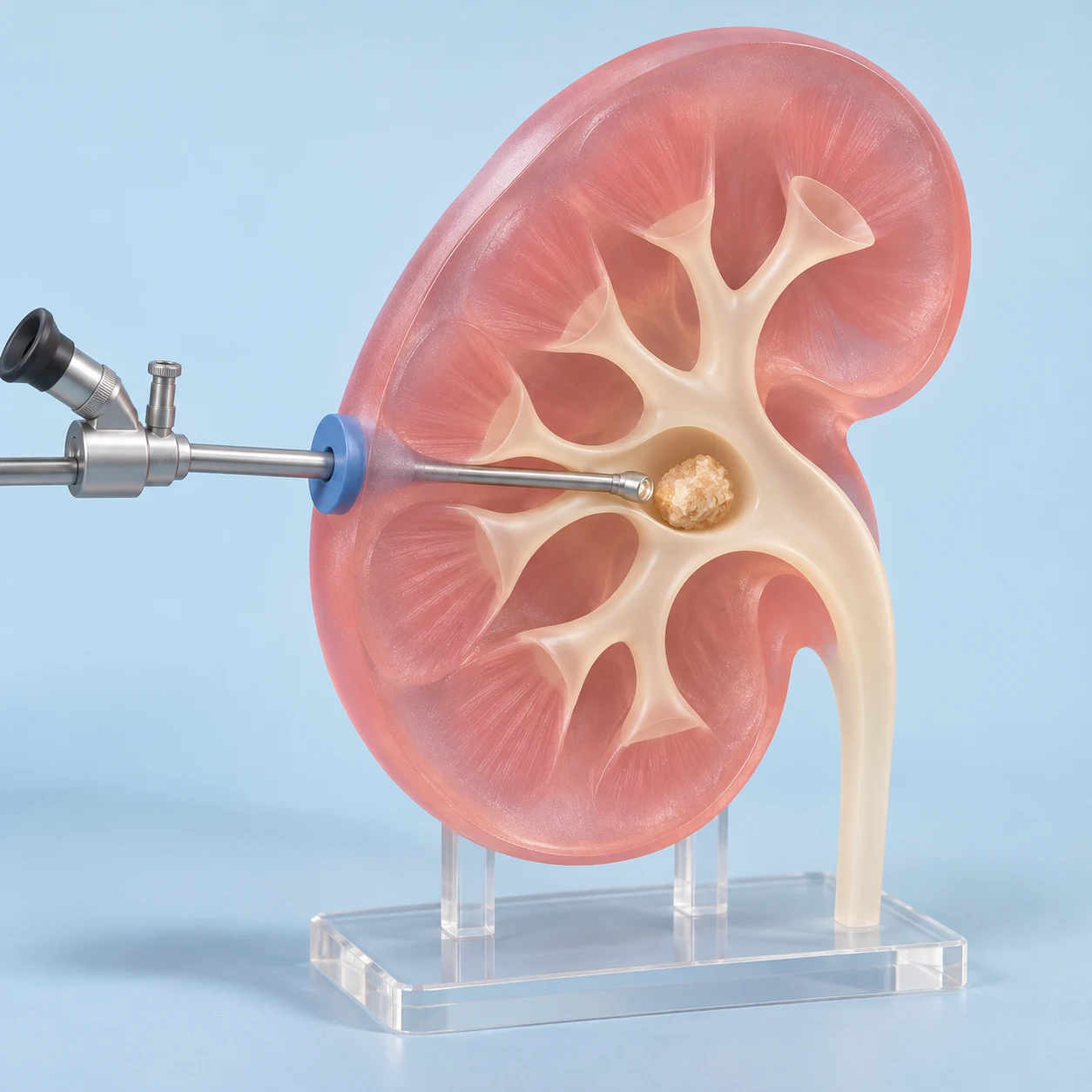
Percutaneous nephrolithotomy (PCNL) is an operation to remove kidney stones through a small opening in the back. For adults with kidney stones larger than 2 cm, it is usually the first treatment a urologist considers when removal is needed. If you have been advised to have PCNL, Dr. Shyam Mohan offers consultations in Chembur, Mumbai, to review your scans and discuss the options.
When to seek urgent care.
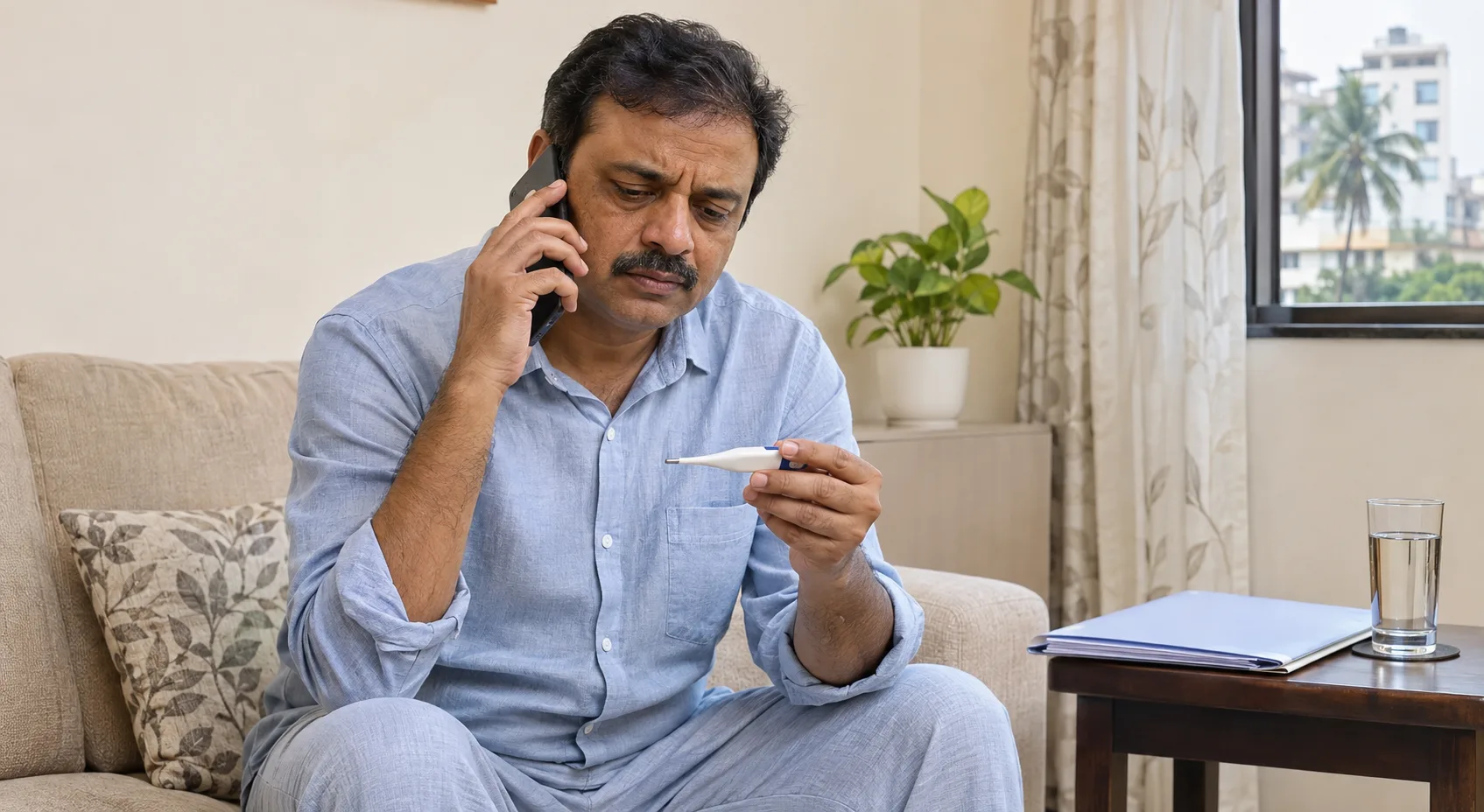
If you have pain from a suspected kidney stone along with fever or shaking chills, go to the nearest emergency department. An infected, blocked kidney may need urgent drainage and antibiotics. The team usually treats the stone after the infection settles.
When might a urologist recommend PCNL?
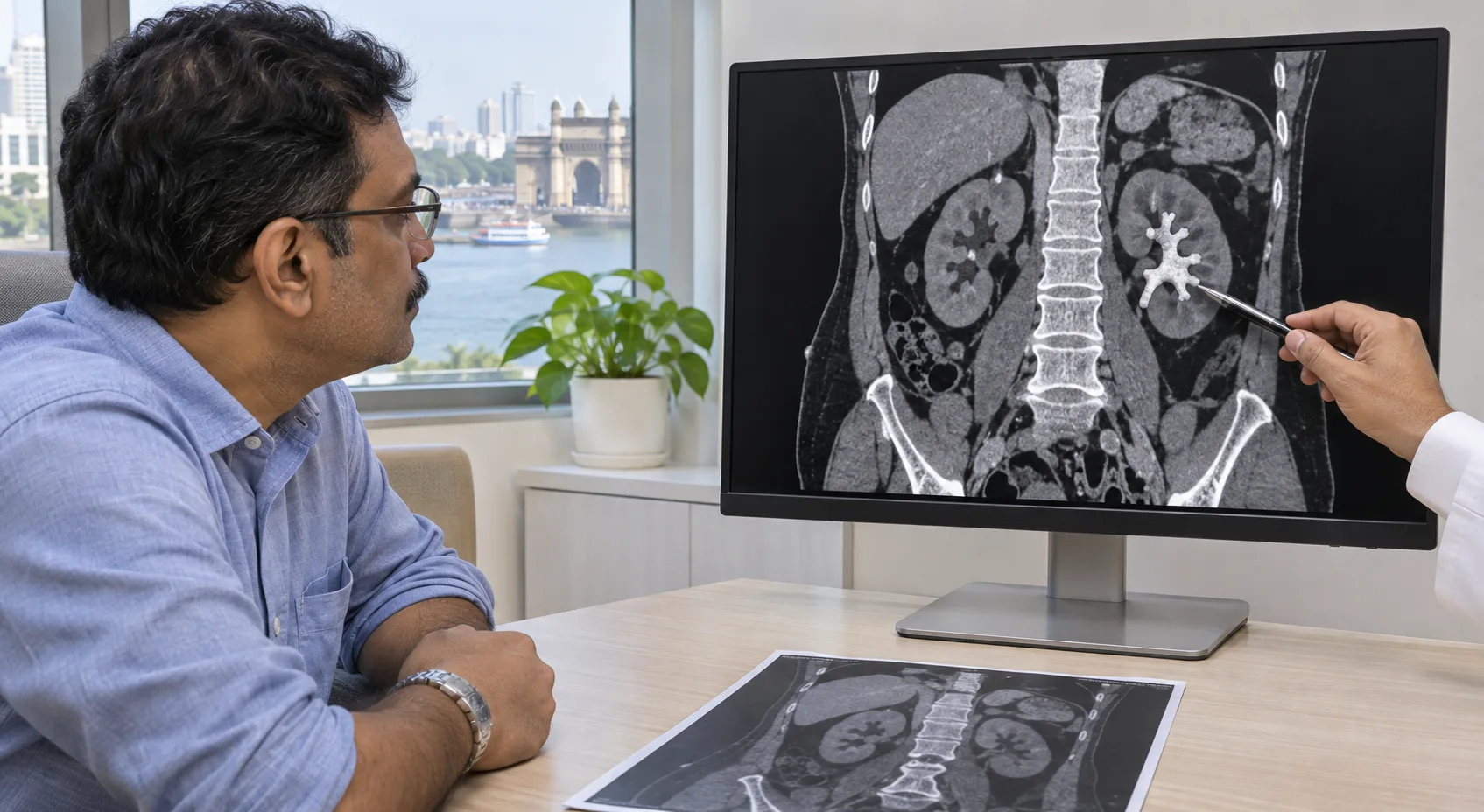
A scan report may describe a single large stone, several stones in one kidney, or a staghorn stone. A staghorn stone branches into the spaces inside the kidney where urine collects. Its shape can make it difficult to remove through the urinary tract alone.
To decide whether PCNL is suitable, the urologist looks at the combined size and position of the stones, how well the kidney drains, and whether you have pain or repeated infections. If you have already had stone treatment, bring the earlier scans so the doctor can see which fragments remain.
How does PCNL compare with other kidney stone treatments?
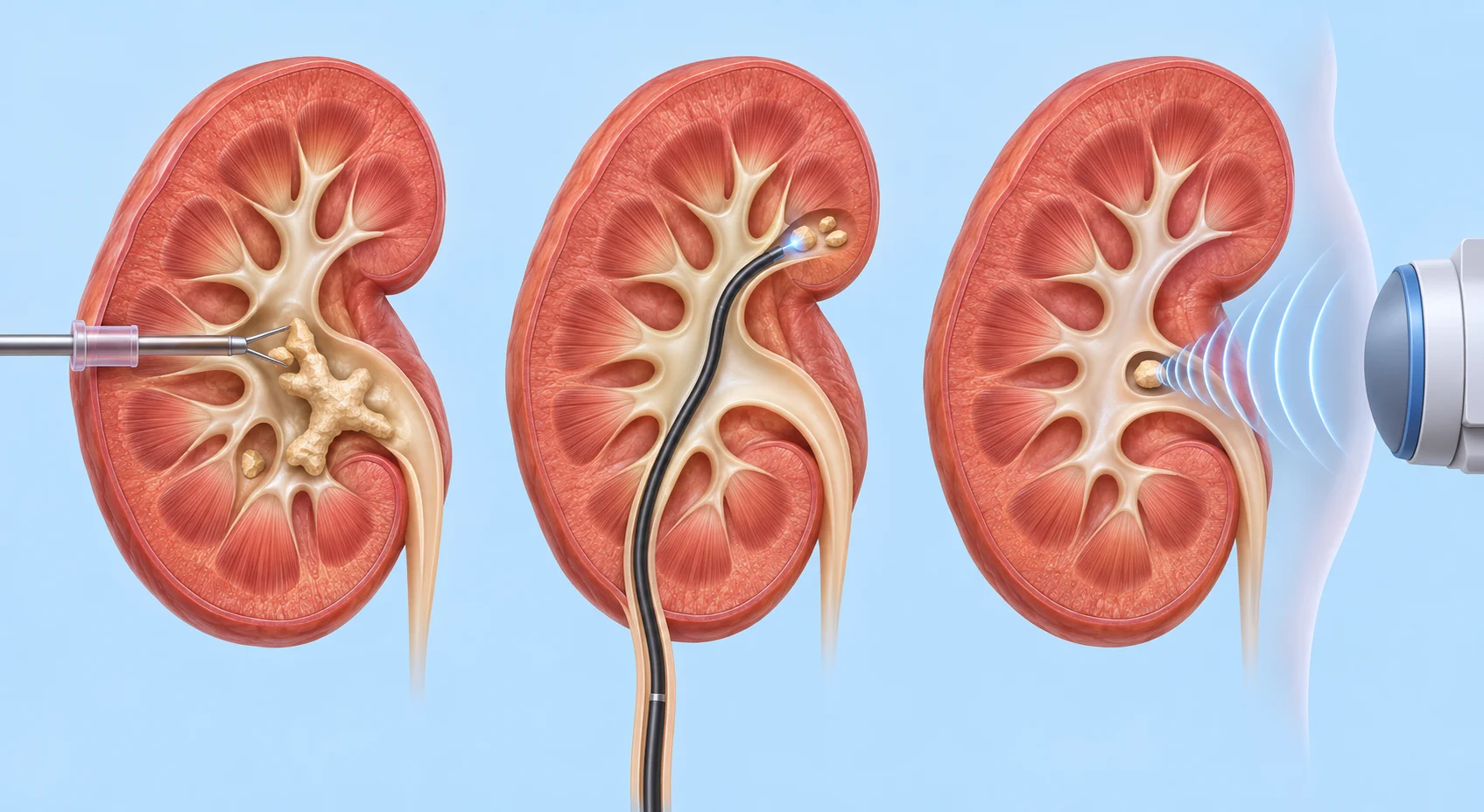
| Option | How it works | When it may be considered |
|---|---|---|
| PCNL | The surgeon reaches the kidney through the back and removes stone fragments directly. | Often the first option for stones over 2 cm or branching stones. Complex stones may need staged treatment. |
| Retrograde intrarenal surgery (RIRS) | A flexible scope travels through the urinary tract into the kidney. A laser breaks up the stone. | An option for many smaller stones and for selected larger stones when PCNL is unsuitable. Larger stones may need more than one session. |
| Shock wave lithotripsy (SWL) | Shock waves from outside the body break up a stone so fragments can pass in urine. | An option for selected smaller stones. Stone density and location affect how well it works. |
Some small kidney stones that cause no symptoms or blockage can be monitored with follow-up imaging. You can also read about kidney stone treatment options and RIRS surgery.
What happens before and during PCNL?
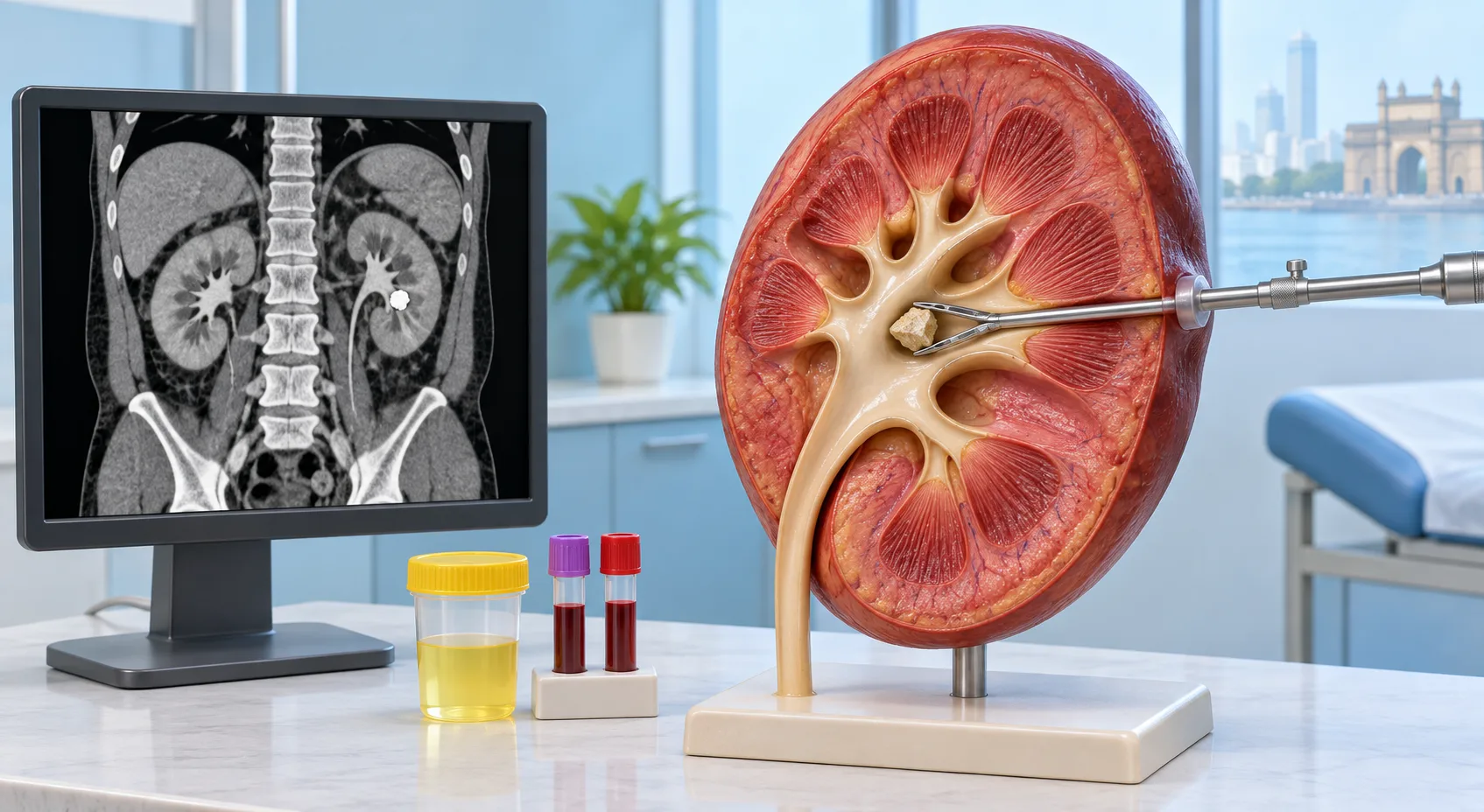
Before surgery, the urologist usually reviews a CT scan to plan a safe route into the kidney. A urine test checks for infection, and blood tests help assess kidney function and bleeding risk. Tell the team if you take aspirin, clopidogrel or another blood thinner. Ask for specific instructions before changing any dose.
PCNL usually takes place under general anaesthesia. The surgeon uses imaging to guide a needle into the kidney through the back, then gently widens the opening to pass a viewing instrument called a nephroscope. The surgeon can remove a stone directly or break it into pieces small enough to take out.
At the end of the procedure, some patients need a temporary ureteric stent, an internal tube that helps urine flow from the kidney to the bladder. Others may need a nephrostomy tube, which drains urine through the back into a bag. Before discharge, ask which tube you have, how to care for it and when it will be removed.
What are the risks of PCNL?
Possible complications include bleeding, infection, urine leakage and injury to a nearby organ. Some patients need a blood transfusion or another procedure to control bleeding. An infection can occasionally become serious and lead to sepsis. If stone fragments remain, the surgeon may recommend another procedure or follow-up scans, depending on their size and location.
Recovery after PCNL
Many patients spend one or two nights in hospital. The stay may be longer if you need further drainage, treatment for infection or a second procedure. Mild soreness around the opening and pink urine can occur during recovery. Gentle walking is usually encouraged as you feel able. Ask your surgeon when you can lift heavy objects, exercise or return to a physically demanding job.
Seek urgent medical care after discharge if you develop fever or shaking chills, heavy bleeding or large clots in the urine, worsening pain despite prescribed medicine, or difficulty passing urine. If you go home with a nephrostomy tube, contact the surgical team promptly if it stops draining.
What does PCNL surgery cost in Mumbai?
The estimate depends on the hospital, the complexity of the stones and whether treatment is planned in one or more stages. Ask the hospital for a written estimate that lists the surgeon’s and anaesthetist’s fees, operating theatre charges, room charges and tests. If a stent is planned, check whether its removal and follow-up imaging are included.
Kidney stone consultation in Chembur, Mumbai
Dr. Shyam Mohan is a Consultant Urologist, Uro-Oncologist and Robotic Surgeon in Mumbai. His qualifications include MBBS, MS (General Surgery), MCh (Urology) and a Fellowship in Advanced Robotic Uro-Oncology.
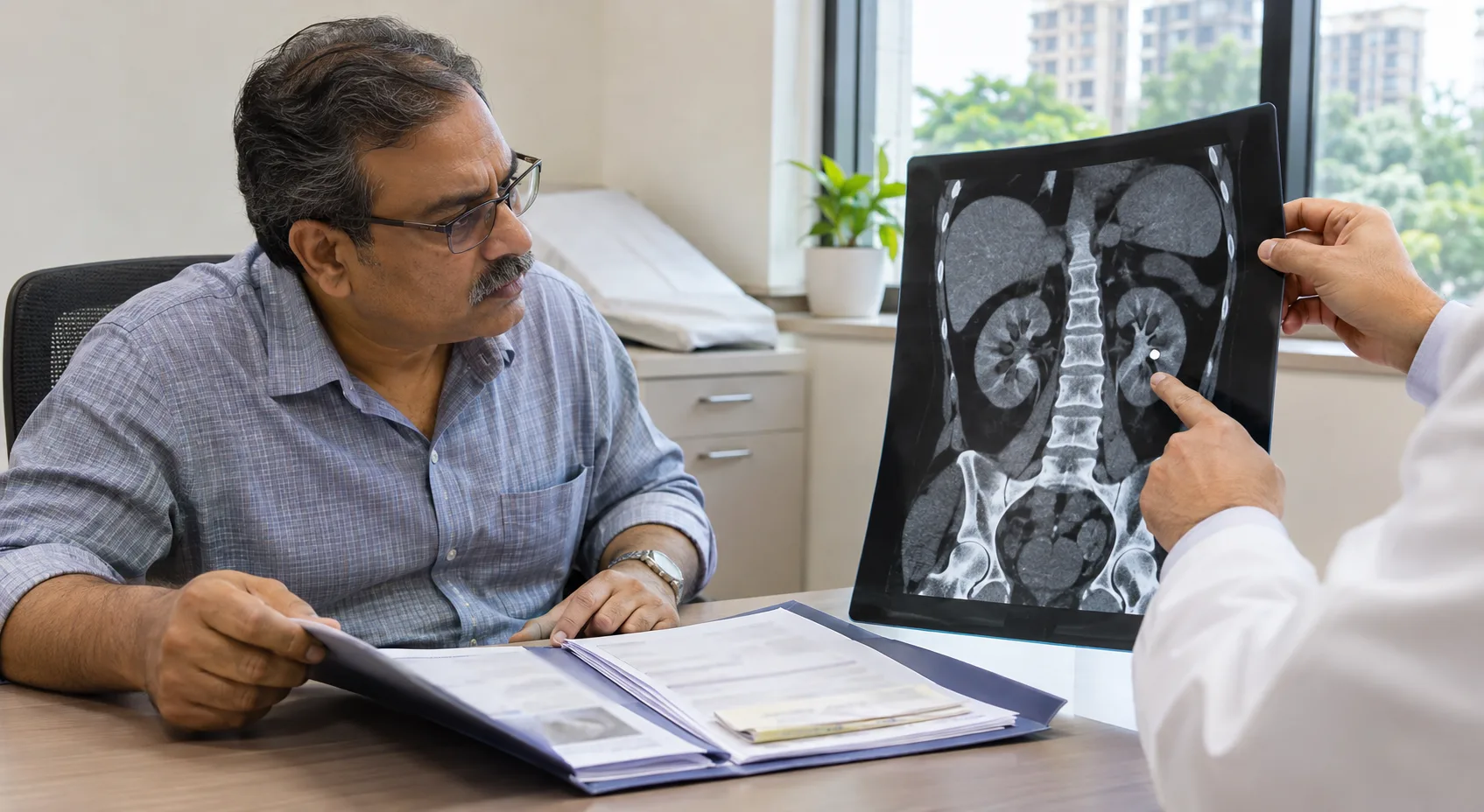
For a PCNL consultation, bring your ultrasound or CT images and reports, recent urine and blood test results, current medicine list and any discharge summary from earlier stone treatment. If surgery is advised, the clinic can confirm the operating hospital and admission arrangements.
Consultation address
Synergy Health Clinic, 501, 5th Floor, Building 2, Business Point, opposite Saibaba Mandir, Chembur, Mumbai, Maharashtra 400077.
Appointments · +91 98925 33940 · Clinic contact and directions
