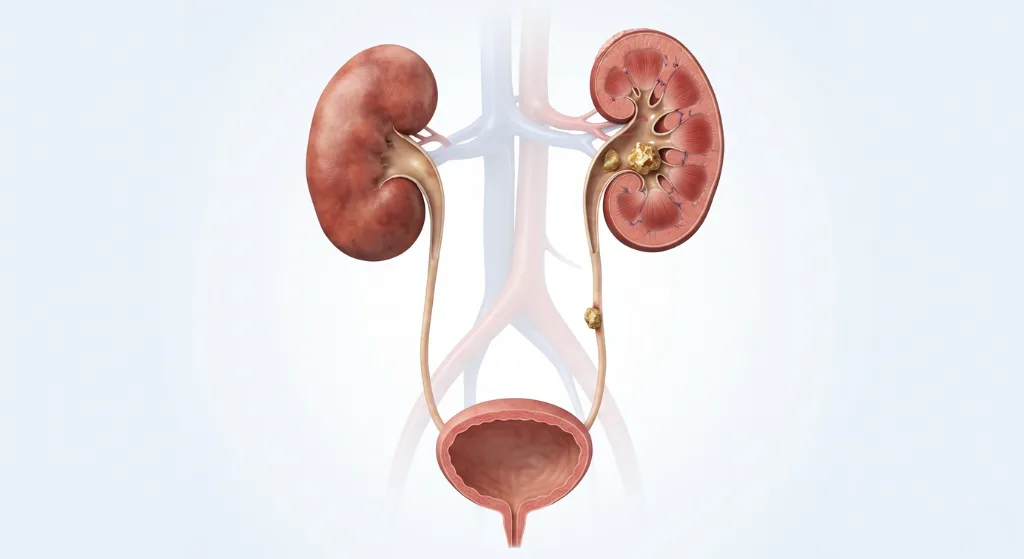
Kidney stone pain often begins suddenly in the side or back, just below the ribs. As the stone moves through the urinary tract, the pain may spread towards the lower abdomen or groin. The discomfort can be intense, come in waves and sometimes occur alongside nausea, vomiting or blood in the urine.
However, not every episode of kidney stone pain is a medical emergency. Some small stones pass naturally, while others can block urine flow, cause serious infection or affect long-term kidney function.
Understanding where kidney stone pain starts, how it changes and which symptoms require urgent medical attention can help you seek appropriate, timely care.
Seek immediate emergency medical care if kidney stone pain is accompanied by fever, chills, inability to pass urine, severe uncontrolled pain or persistent vomiting.
Where Does Kidney Stone Pain Usually Start?
Kidney stone pain commonly begins in the flank—the area between the lower ribs and the hip on either side of the back. The location of pain often depends on where the stone is situated within the urinary tract.
1. Pain in the Side or Lower Back
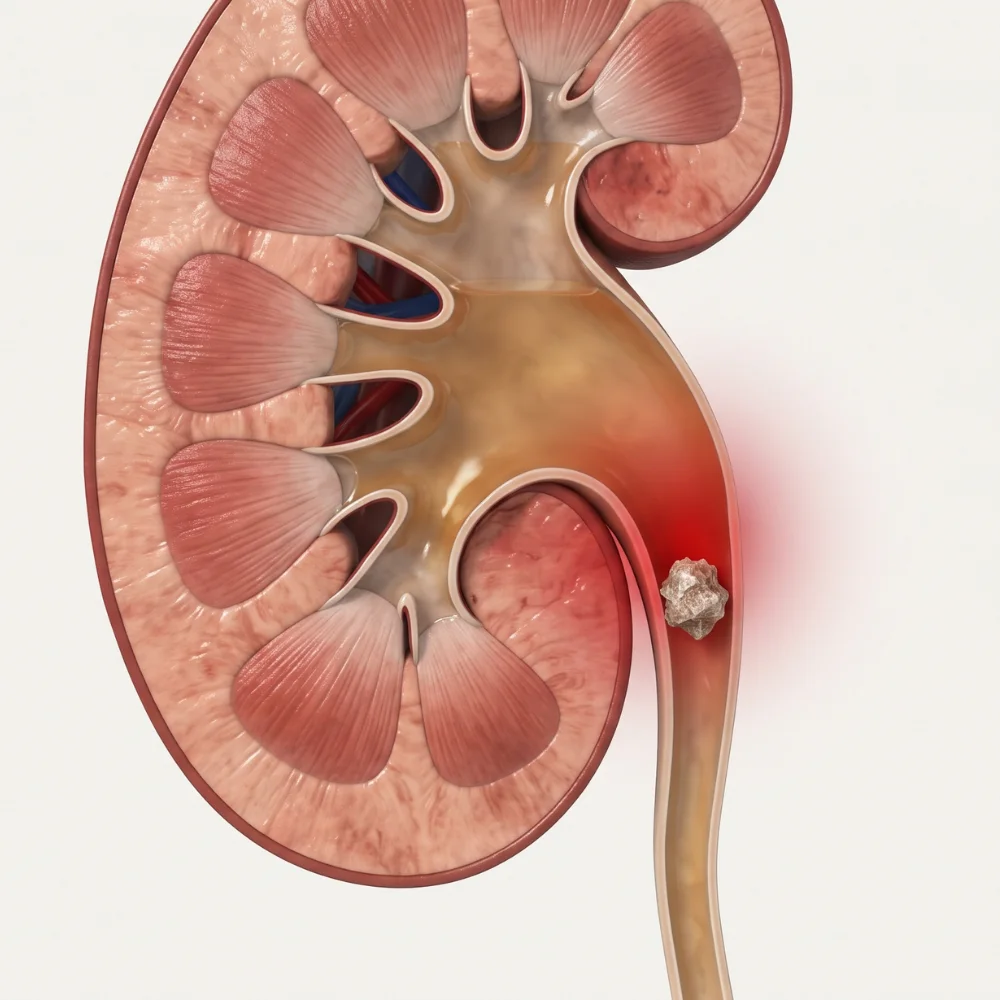
When a stone moves from the kidney into the ureter (the narrow tube draining urine to the bladder), it may obstruct urine flow and cause sudden pain on one side of the back. This pain is typically described as:
- Sharp, knife-like, or intense aching
- Located right below the lower rib cage
- Noticeable primarily on one side
- Sudden and unpredictable in onset
- Coming and going in painful waves (spasms)
Kidney stones that remain quietly within the kidney tissue may cause no symptoms at all. Severe, debilitating pain is more commonly associated with obstruction or movement into the ureter.
2. Pain Spreading Towards the Lower Abdomen
As a stone travels down the ureter, the pain frequently shifts from the upper flank towards the lower abdomen. Some patients experience discomfort that migrates over hours or days. The pain may intensify significantly during episodes of ureteric spasm or acute obstruction.
3. Pain in the Groin
When a kidney stone reaches the lower part of the ureter near the bladder entrance, pain frequently radiates towards the groin. In men, this pain may radiate down into the testicle or scrotum, while women may feel discomfort near the labia or pelvic area.
Because these symptoms can resemble other medical conditions—such as appendicitis, ovarian issues, or testicular torsion—pain location alone cannot confirm a kidney stone without diagnostic imaging.
Kidney Stone Pain Location: What Does It Indicate?
| Pain Location | Possible Clinical Explanation |
|---|---|
| Side or back below the ribs | Stone causing obstruction in the kidney calyx or upper ureter |
| Side spreading to lower abdomen | Stone travelling progressively down through the mid-ureter |
| Lower abdomen or groin | Stone lodged in the lower ureter or approaching the bladder |
| Groin with urinary urgency & frequency | Stone irritating the ureterovesical junction (bladder-ureter entrance) |
| Back pain accompanied by fever & chills | Possible infected obstructed kidney—a critical medical emergency |
Why Is Kidney Stone Pain So Severe?
Kidney stone pain is clinically known as renal colic.
Severe pain happens when a stone blocks the normal downstream drainage of urine through the ureter. This obstruction triggers urine backup, increasing pressure within the renal pelvis (collecting system). The stretched kidney capsule and muscular ureter contract in fierce spasms trying to push the obstruction through.
Unlike ordinary muscular back pain, renal colic makes it nearly impossible to sit still or find a comfortable posture. Patients often pace the room, writhe, or roll in distress.
Crucially, the severity of pain does not reflect the size of the stone. A tiny 3mm stone lodged tightly in the ureter can cause agonizing renal colic, while a large 3cm "staghorn" stone resting quietly inside the kidney may cause little more than a mild dull ache.
What Are the Other Symptoms of Kidney Stones?
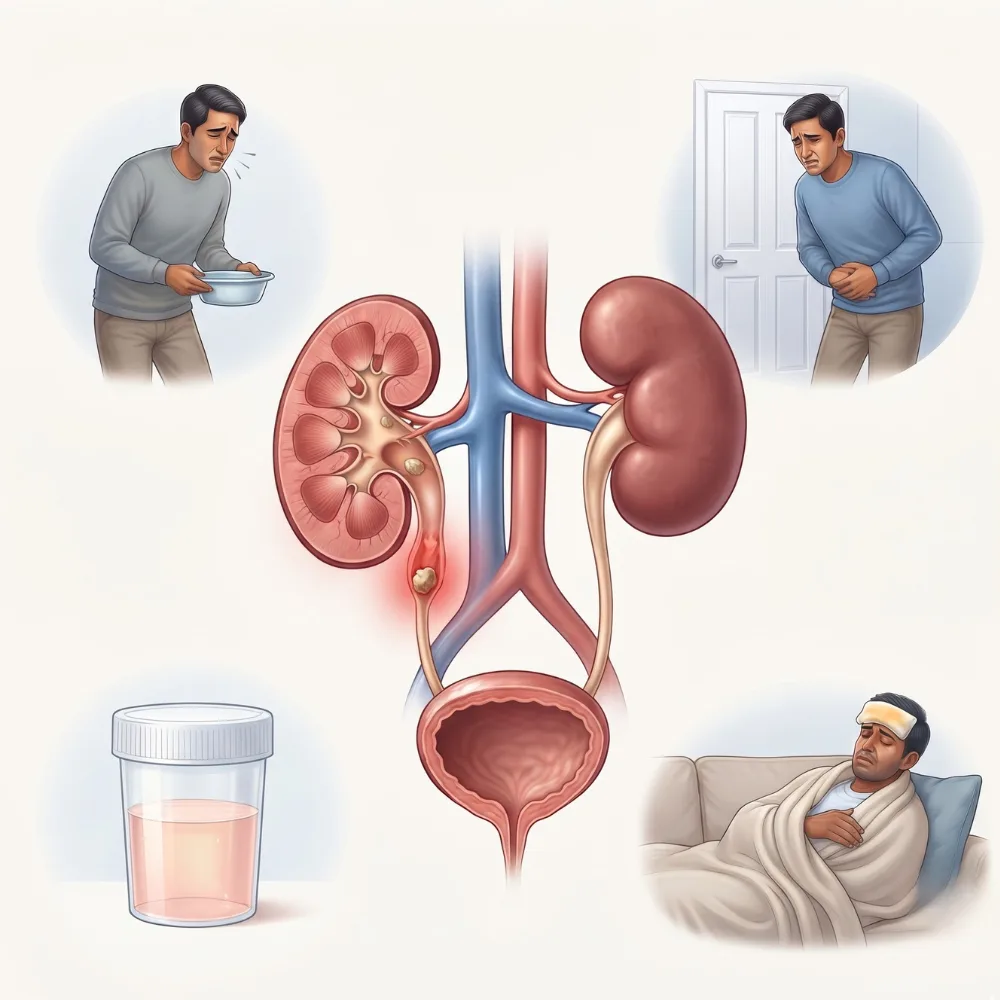
Kidney stone pain rarely happens in total isolation. It is frequently accompanied by urinary or systemic symptoms:
- Blood in the Urine (Hematuria): Urine may appear pink, red, or brown like iced tea. Microscopic blood may also be detected on laboratory urinalysis.
- Burning During Urination: Discomfort or stinging as the stone irritates the lining or bladder neck.
- Frequent Urination & Urgency: Constant urge to urinate, especially as the stone nears the bladder.
- Nausea and Vomiting: Caused by shared nerve pathways between the kidneys and gastrointestinal tract (the splanchnic plexus).
- Difficulty Passing Urine: Straining or reduced output. Sudden complete inability to urinate requires urgent evaluation.
- Fever or Chills: May indicate that bacteria are multiplying behind a blocked kidney—requiring emergency intervention.
When Is Kidney Stone Pain an Emergency?
Although many smaller stones can pass safely under watchful waiting, specific symptoms must never be ignored:
Kidney Stone Pain With Fever or Chills
Fever combined with flank pain points to an infected, obstructed kidney (pyonephrosis). When urine cannot drain, bacteria proliferate rapidly, potentially leading to urosepsis—a life-threatening condition requiring urgent hospital admission and drainage.
Severe Pain That Does Not Improve With Medication
Uncontrolled renal colic that persists despite oral analgesics indicates sustained high pressure and obstruction requiring hospital-grade intravenous pain control or surgical relief.
Inability to Pass Urine (Anuria)
A sudden inability to urinate or sharply reduced urine volume is an urgent red flag, especially in patients with a solitary functioning kidney or bilateral stones blocking both sides simultaneously.
Persistent Vomiting and Dehydration
Continuous vomiting prevents patients from keeping fluids or oral medicines down, risking acute kidney dehydration that complicates stone management.
Kidney Stone Symptoms During Pregnancy
Pregnant individuals experiencing suspected renal colic require immediate specialist evaluation to ensure both maternal and fetal safety, utilizing safe imaging modalities like ultrasound or low-field MRI.
Kidney Stone Pain With Known Chronic Kidney Disease
Patients with pre-existing renal impairment, a transplanted kidney, or a single kidney must be evaluated immediately to prevent irreversible loss of nephron function.
Kidney Stone Pain vs Normal Back Pain: How Can You Tell?
Because flank pain and musculoskeletal back pain occur in overlapping areas, distinguishing between them is critical:
| Feature | Kidney Stone Pain (Renal Colic) | Muscular / Spinal Back Pain |
|---|---|---|
| Location | Usually one-sided flank (deep below ribs) | Lower back, lumbar spine, or across muscle band |
| Pain Pattern | Comes in intense spasmodic waves (colic) | Constant ache or soreness; tied to posture/movement |
| Radiation | Radiates down towards lower abdomen & groin | May radiate down buttocks or thighs (sciatica) |
| Urinary Symptoms | Frequent: blood in urine, dysuria, urgency | Usually completely absent |
| Nausea / Vomiting | Commonly triggered during intense spasms | Rarely present |
| Effect of Position | No position brings relief; patient restlessly paces | Lying down, stretching, or resting often relieves ache |
Note: These differences offer general guidance. Other acute conditions (such as appendicitis, diverticulitis, or spinal disc herniation) can mimic these symptoms and require professional assessment.
Can Kidney Stone Pain Stop Without the Stone Passing?
Yes. A temporary disappearance of pain does not guarantee that the stone has passed out of your body.
Pain can subside when the stone slightly shifts within the ureter, allowing some urine to trickle past and lowering renal pressure. Alternatively, the muscular wall of the ureter may temporarily fatigue and relax. The stone may remain lodged, quietly causing continuous low-grade backpressure.
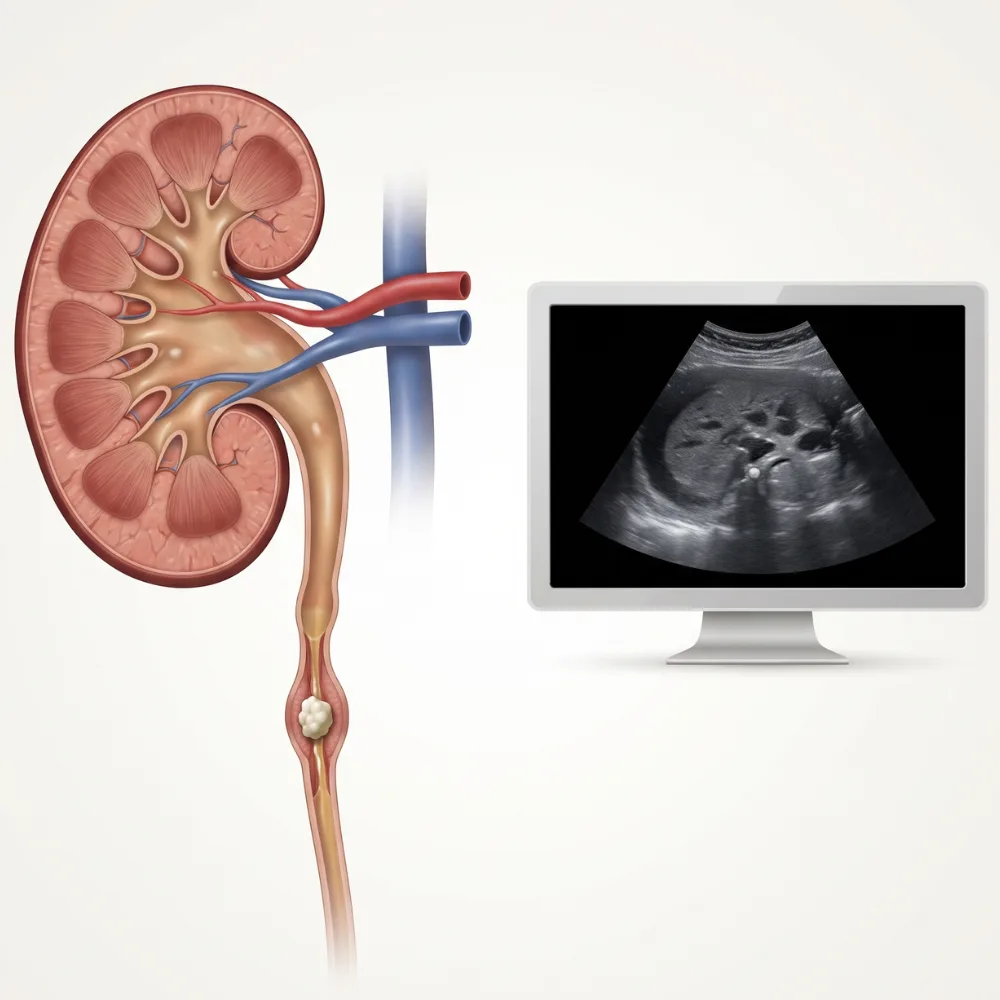
This is why follow-up imaging (such as an ultrasound or X-ray) is necessary to verify stone clearance and protect long-term kidney health.
How Do Doctors Diagnose the Cause of Kidney Stone Pain?
A urologist will assess symptoms, perform a physical exam, and order targeted diagnostic tests:
- Urine Examination: Detects microscopic blood, crystals, pus cells, and signs of concurrent bacterial infection.
- Ultrasound KUB (Kidney, Ureter, Bladder): A rapid, radiation-free first-line test to visualize stones and detect kidney swelling (hydronephrosis).
- Non-Contrast CT KUB: The clinical gold standard for urinary stone assessment. It pinpoints the exact stone size, density (Hounsfield units), and location within the urinary tract.
- Blood Tests: Evaluates serum creatinine to assess kidney clearance and tests white blood cell counts to rule out systemic infection.
How Is Kidney Stone Pain Treated?
Treatment depends on the stone size, anatomical location, severity of obstruction, and presence of infection:
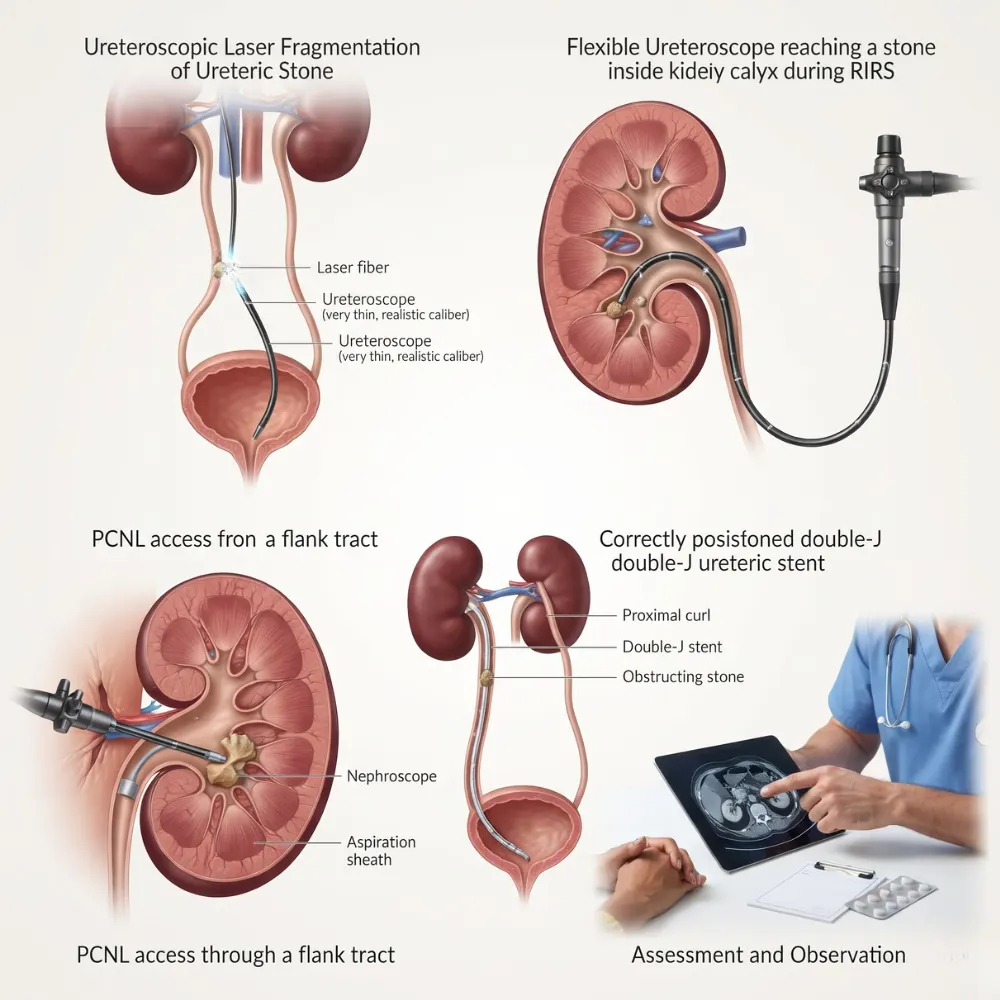
1. Acute Pain Management
Non-steroidal anti-inflammatory drugs (NSAIDs) are first-line agents when clinically appropriate, as they reduce ureteric inflammation and prostaglandin synthesis. They must be prescribed with caution in patients with impaired kidney function or gastric ulcers.
2. Observation and Medical Expulsive Therapy (MET)
Small ureteric stones (under 5mm) often pass spontaneously. Medications such as alpha-blockers can help relax the lower ureter to facilitate passage under close medical supervision. Learn more on our Kidney Stone Treatment service page.
3. Ureteroscopy (URS) & Laser Stone Removal
For stones stuck in the ureter causing persistent symptoms, a thin semi-rigid scope is guided into the urinary tract without any external cuts. Holmium or Thulium laser fibers pulverize the stone into dust. Read about our Laser Kidney Stone Surgery.
4. RIRS Surgery (Retrograde Intrarenal Surgery)
A state-of-the-art procedure using a flexible endoscope navigating natural urinary pathways directly inside the kidney calyces to fragment stones using laser energy. Discover our RIRS Surgery.
5. PCNL Surgery (Percutaneous Nephrolithotomy)
For larger kidney stones (typically greater than 2cm) or complex staghorn calculi, a miniature keyhole tract is created through the back directly into the kidney for complete removal.
6. Emergency Urinary Drainage
If an obstructing stone causes infection or complete blockage, urgent drainage takes priority. The urologist will place a temporary double-J (DJ) ureteric stent or percutaneous nephrostomy tube to release blocked urine and antibiotics before definitive stone surgery.
What Should You Do If You Suspect Kidney Stone Pain?
- Seek prompt medical evaluation to establish an accurate diagnosis and prevent complications.
- Never ignore warning signs: Fever, chills, vomiting, or inability to urinate require immediate hospital attention.
- Drink fluids sensibly: Maintain adequate hydration if you can drink comfortably, but avoid forcing huge volumes of water during acute pain, which can worsen renal swelling.
- Avoid self-medicating: Over-the-counter painkillers can mask escalating infection or injure kidneys.
- Complete follow-up: Confirm stone clearance with post-treatment imaging.
How Can You Reduce the Risk of Kidney Stones?
- Maintain generous fluid intake (at least 2.5–3 litres daily so urine remains pale and clear).
- Moderate dietary sodium (excess salt promotes calcium excretion into urine).
- Maintain normal dietary calcium intake unless medically advised otherwise.
- Avoid excessive animal protein intake.
- Undergo a 24-hour metabolic urinary workup if you have recurrent stones.

Kidney Stone Consultation in Chembur, Mumbai
Dr. Shyam Mohan – Consultant Urologist & Robotic Surgeon
With qualifications including MBBS, MS (General Surgery), and MCh (Urology), along with extensive experience in advanced laser endourology and RIRS, Dr. Shyam Mohan provides comprehensive evaluation and modern treatment for kidney stones.
Consultations are held at Synergy Health Clinic in Chembur, Mumbai. Patients can discuss their ultrasound or CT findings, stone pain, and personalized treatment pathways.
Conclusion
Kidney stone pain usually begins in the side or back and may radiate towards the lower abdomen or groin as the stone travels down the urinary tract.
Although some stones pass naturally, severe or persistent pain indicates urinary obstruction requiring expert attention. Fever, chills, inability to urinate, persistent vomiting or uncontrolled pain are warning signs requiring immediate emergency medical evaluation. Identifying the stone's exact location, size, and impact on kidney function is the key to safe, effective treatment.